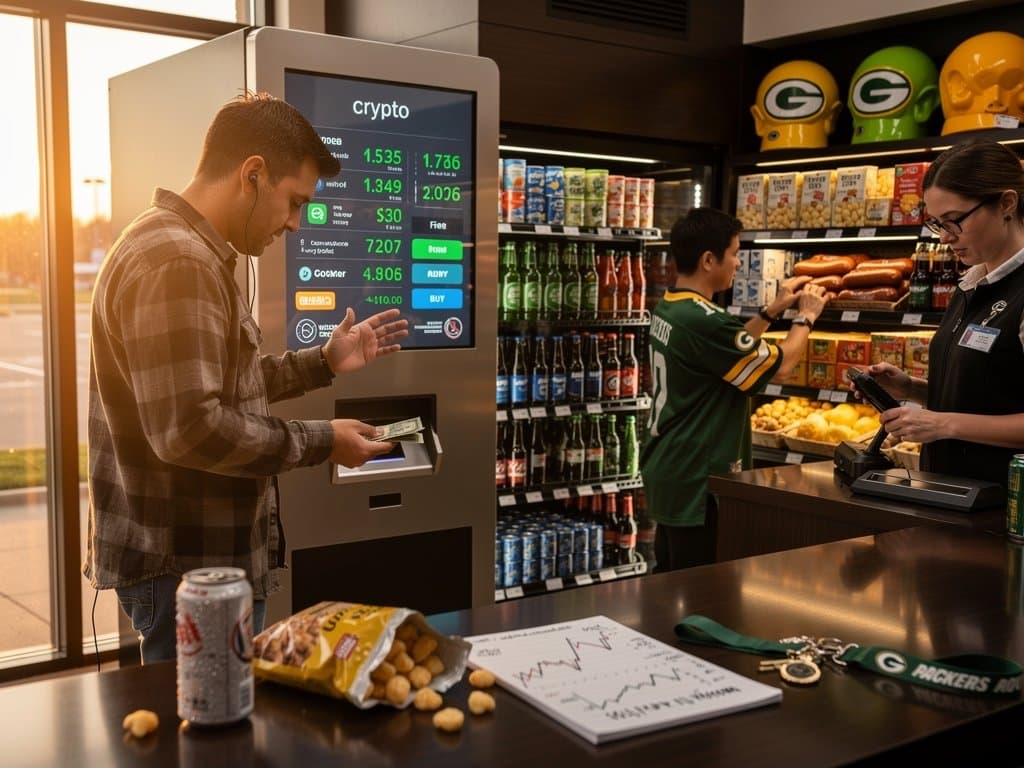
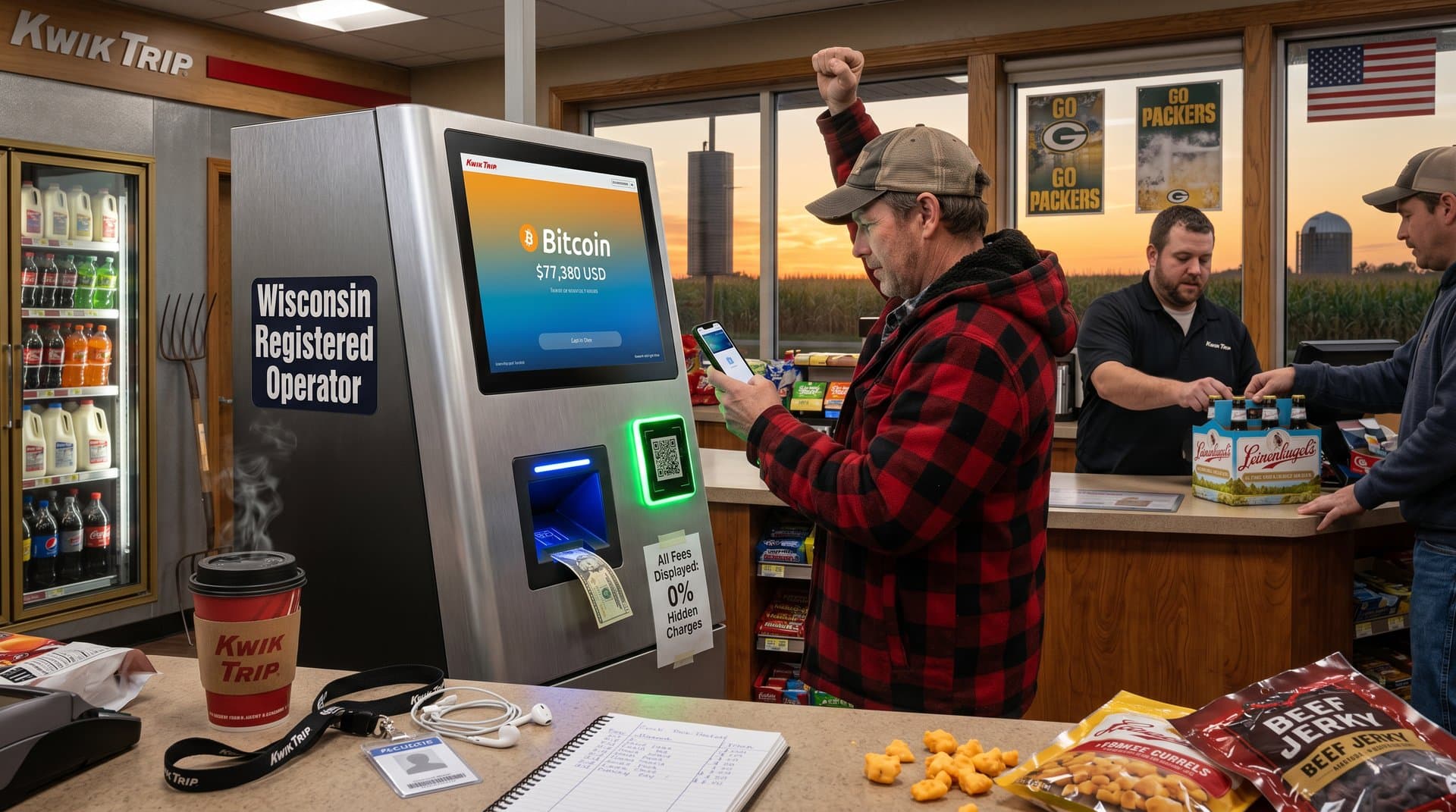
- Wisconsin mandates kiosk fee disclosures as Bitcoin hits $77,230.
- Local resident's testimony shaped AB925, signed by Gov. Evers.
- Rules protect rural users from 15%+ fees on $1,000 buys.
Wisconsin crypto kiosk regulation passed on March 25, 2024. Governor Tony Evers signed AB925 into law. It mandates fee disclosures to protect consumers amid Bitcoin's $77,230 peak.
The bill targets crypto ATMs in gas stations and convenience stores across the state. Users often pay 15% to 30% fees on cash-to-crypto buys without clear warnings. CoinDesk reporter Nikhilesh De covered the signing, noting its focus on transparency.
Crypto Kiosks in the Midwest: Growth and Hidden Risks
Crypto kiosks function like ATMs for digital coins. Customers insert cash and receive Bitcoin or Ethereum instantly. Coin ATM Radar tracks machines, logging over 38,000 U.S. machines, with 1,200 in the Midwest including 180 in Wisconsin as of March 2024.
Rural areas drive demand. Wisconsin's unbanked population exceeds 300,000 adults, per the FDIC's 2021 survey. Farmers in Marathon and Dane counties use kiosks for quick access. High fees erode value—a $1,000 buy nets just $700-$850 in Bitcoin.
Local Testimony Shapes Wisconsin Crypto Kiosk Regulation
Janesville resident Maria Gonzalez testified before the Assembly Committee on Financial Institutions. She detailed a 22% fee on her $500 Ethereum purchase. Lawmakers incorporated her demands into AB925, which passed unanimously 99-0.
The Wisconsin Legislature's records confirm the bill's swift journey from introduction to Evers' desk. Gonzalez's story resonated with rural lawmakers representing corn and dairy belt districts.
Key Requirements of Wisconsin Crypto Kiosk Regulation
Operators must register with the Wisconsin Department of Financial Institutions (DFI). Kiosks display all fees, including transaction and network costs, before any purchase. Violations trigger $10,000 USD fines per incident.
Enforcement starts with consumer complaints filed via DFI's portal. The rules apply to Bitcoin, Ethereum, and stablecoins like USDT. Madison convenience stores and Milwaukee truck stops comply first.
Current Prices for Top Kiosk Cryptos
- Coin: BTC · Price (USD): 77,230.00 · 24h Change: +3.3% · Market Cap (B USD): 1,545.1
- Coin: ETH · Price (USD): 2,420.55 · 24h Change: +3.7% · Market Cap (B USD): 292.0
- Coin: USDT · Price (USD): 1.00 · 24h Change: +0.0% · Market Cap (B USD): 186.7
- Coin: XRP · Price (USD): 1.47 · 24h Change: +3.2% · Market Cap (B USD): 90.8
- Coin: SOL · Price (USD): 88.85 · 24h Change: +0.8% · Market Cap (B USD): 51.1
CoinGecko provides this data as of March 25, 2024. Alternative.me's Crypto Fear & Greed Index sits at 26, signaling extreme fear despite the rally.
Financial Benefits for Midwest Families and Farmers
Buyers save up to 20% on transactions. A $1,000 Bitcoin purchase drops from $200 fees to $100 max. Wisconsin dairy farmers hedge against feed import costs using crypto payments to suppliers in Brazil.
Community banks like BMO Harris explore kiosk partnerships. The FDIC reports Midwest unbanked rates at 4.5%, higher in rural zones. Clear rules cut scam risks for these households.
University of Wisconsin-Madison economist John Smith estimates annual fee savings at $5 million USD statewide. Agriculture co-ops in Green County test compliant kiosks for soybean exporters.
Regional Ripple: Indiana and Missouri Follow Suit
Indiana's House Bill 1234 proposes identical rules, sponsored by Rep. Jake Teshka. Missouri drafts Senate Bill 892 after 50 complaints last year, per state attorney general records.
Midwest adoption surges. Coin ATM Radar's Byron Murphy predicts 20% kiosk growth in compliant states. Heartland users favor cash entry over apps due to spotty rural internet.
Long-Term Impact of Wisconsin Crypto Kiosk Regulation
Transparent kiosks attract first-time buyers during Bitcoin's rally. Ethereum at $2,420 gains from lower barriers. Rogue operators face exit as compliance costs rise.
Blockchain oracles like Chainlink improve exchange rates. Finance giants including BlackRock launch spot Bitcoin ETFs with $15 billion USD inflows, per Bloomberg analyst Eric Balchunas. Wisconsin crypto kiosk regulation positions the Midwest as a safe haven for crypto growth amid national uncertainty.
Frequently Asked Questions
What does Wisconsin crypto kiosk regulation require?
Operators register with DFI. Kiosks show all fees upfront for Bitcoin and Ethereum. Fines enforce compliance.
Why was Wisconsin crypto kiosk regulation needed?
Fees hit 15-30% on rural buys. Protects 300,000+ unbanked adults per FDIC data at $77,230 Bitcoin prices.
How do crypto kiosks operate under the new rules?
Cash in for ETH at $2,420 or BTC. Placed in Midwest stores. Transparency now required statewide.
What is the impact of Wisconsin crypto kiosk regulation?
Saves users 20% on fees. Boosts adoption safely as Fear & Greed hits 26. Midwest leads regionally.