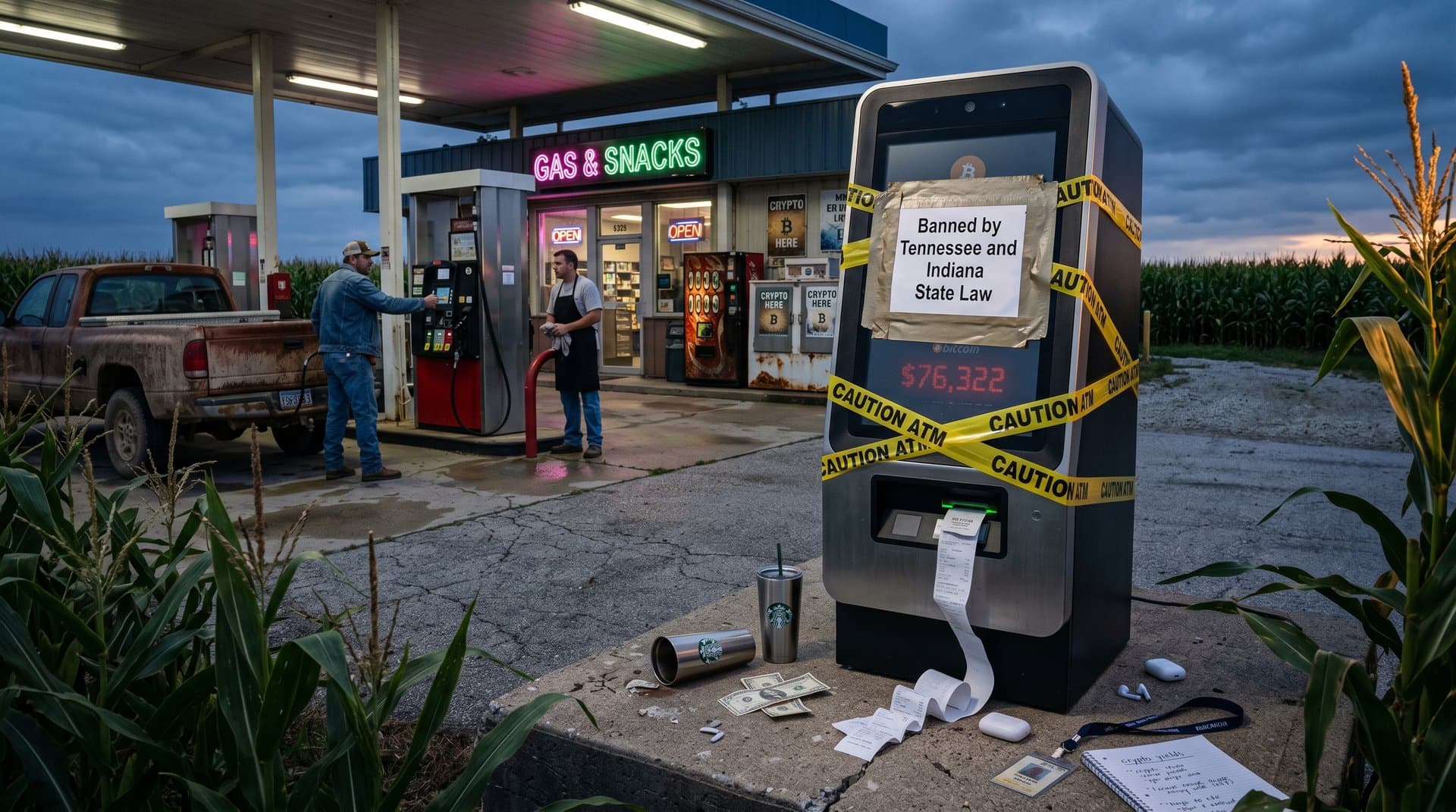
- Tennessee crypto ATMs ban started April 10, 2024, copying Indiana's fraud rules.
- Bitcoin fell 1.3% to $76,322 USD; Fear & Greed Index dropped to 26.
- Midwest farmers switch to Coinbase and Kraken apps for quick crypto access.
Tennessee lawmakers enacted the Tennessee crypto ATMs ban on April 10, 2024. The rule mirrors Indiana's regulations. It halts cash-to-Bitcoin kiosks across the state. Bitcoin dropped 1.3% to $76,322 USD, per CoinGecko data on April 11, 2024. Ethereum fell 0.6% to $2,288.73 USD. The Fear & Greed Index hit 26, signaling fear, according to Alternative.me.
Operators shut down machines right away. Rural users lose quick cash access. Cash-reliant farmers now face delays converting dollars to crypto.
- Asset: BTC · Price (USD): 76,322.00 · 24h Change: -1.3%
- Asset: ETH · Price (USD): 2,288.73 · 24h Change: -0.6%
- Asset: USDT · Price (USD): 1.00 · 24h Change: 0.0%
- Asset: XRP · Price (USD): 1.38 · 24h Change: -1.3%
- Asset: BNB · Price (USD): 624.68 · 24h Change: -0.3%
Indiana Crypto ATMs Rules Pave Way for Tennessee
Indiana capped kiosks in April 2023 after fraud complaints. CoinDesk reported Indiana Governor Eric Holcomb signed the bill on April 11, 2023. Tennessee's HB 2134 cites the same risks. Lawmakers target anonymous cash buys. Scammers exploited weak oversight in both states.
Regulators fear money laundering. Cash deals skip bank records. Blockchain tracks coins post-purchase, but kiosks open entry points. Both states now demand operator registration and transaction caps.
Midwest leaders weigh innovation against safety. BlackRock's spot Bitcoin ETFs, launched January 2024, drew $12 billion USD inflows, per BlackRock SEC filings. Physical ATMs fade as exchanges rise.
Tennessee Rep. Jeremy Faison, HB 2134 sponsor, said: "We protect consumers from predatory kiosks" (Tennessee General Assembly records, April 2024).
Rural Farmers and Manufacturers Bear Brunt of Tennessee Crypto ATMs Ban
Indiana corn farmers used ATMs to hedge prices with Bitcoin. Tennessee auto parts makers paid suppliers in USDT at $1.00 USD. The Tennessee crypto ATMs ban disrupts these cash flows.
Evansville workers cashed paychecks into stablecoins weekly. Urban spots like Chicago reach Coinbase easily. Small-town folks drive hours to Iowa kiosks, if any survive.
Farms favor cash. A 2023 Federal Reserve Bank of St. Louis survey shows 45% of Midwest farms prefer physical currency. The bans push digital shifts. Mobile apps speed conversions.
Decatur, Illinois, grain elevators report 20% slower payments without ATMs, per Decatur Chamber of Commerce data (March 2024).
Fintech Apps and Banks Fill Void Left by Crypto ATMs
Coinbase rolled out Midwest KYC with facial scans. Kraken uses machine learning to spot fraud pre-trade. Users verify in minutes on phones.
Revolut chatbots guide Tennessee farmers. Solana offers fast checks at 0.00025 SOL per transaction. Rural broadband lags—65% of Tennessee counties lack fiber, per FCC Broadband Deployment Report (2024).
Purdue University labs test blockchain for crop insurance, according to Purdue Extension research (2024). Indiana banks team with Circle for USDC on-ramps. Farmers deposit checks straight to wallets.
Chime and Cash App drop fees for crypto buys under $500 USD. Hoosier Hills Credit Union adds stablecoin payouts.
Bitcoin Holds at $76K as Tennessee Crypto ATMs Ban Reshapes Midwest
Crypto ATMs handled $2 billion USD yearly before bans, per FBI 2023 Internet Crime Report. Users shift to exchanges. Bitcoin support at $75,000 USD stands strong.
XRP sits at $1.38 USD, tracking BTC. State rules patchwork slows growth. Federal rules trail ETF nods.
Operators switch to apps. Peer-to-peer deals boom at Indiana farm fairs. Fintech closes gaps for cash sectors.
Biden's $42 billion BEAD program boosts broadband, per NTIA (2024). Stablecoins steady soybean and hog payments. The Tennessee crypto ATMs ban accelerates Midwest digital finance.
Frequently Asked Questions
Why did Tennessee enact the crypto ATMs ban?
Tennessee banned crypto ATMs via HB 2134 on April 10, 2024, to fight fraud and money laundering, following Indiana's lead.
How does the Tennessee crypto ATMs ban impact Midwest users?
Rural Indiana and Tennessee farmers lose cash access. Businesses turn to Coinbase apps. Broadband gaps challenge adoption.
What fintech replaces banned crypto ATMs?
Apps like Kraken use ML for fraud checks. Mobile KYC speeds verification. Purdue labs advance tools.
What is Bitcoin's price amid these regulations?
BTC trades at $76,322 USD, down 1.3%. Fear & Greed at 26. Support at $75,000 USD.