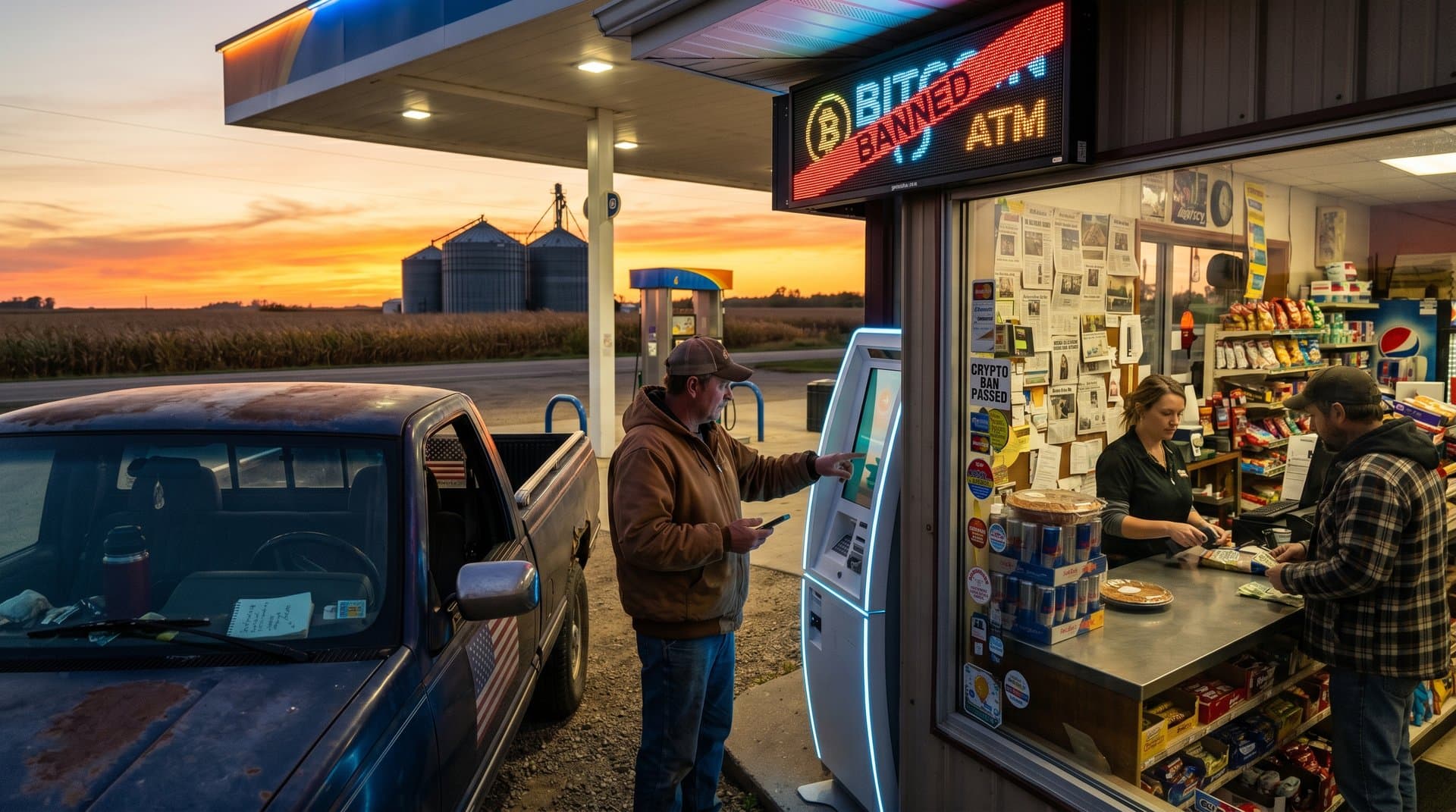
- Bill HF 927 passed May 13, 2024; kiosks banned by 2027.
- 1,069 FTC fraud complaints nationwide in 2023 hit seniors.
- Bitcoin at $76,412 USD; market cap $1,529.7B.
Minnesota lawmakers passed the crypto kiosk ban bill on May 13, 2024. Both chambers approved HF 927. The measure now awaits Gov. Tim Walz's signature. CoinDesk reporter Nikhilesh De notes it targets kiosks with fees above 15% tied to fraud.
Bitcoin hit $76,412 USD on May 14, per CoinGecko data. Its market cap reached $1,529.7 billion. The Fear & Greed Index fell to 33 amid regulatory news.
Kiosk Operators Face Closures in Rural Minnesota
Bitcoin Depot and Coinhub operate 50+ kiosks statewide. They stand in gas stations from Rochester to Duluth. Users buy Bitcoin with cash via QR code. No ID required.
The ban shuts them by 2027. Farmers and truckers lose easy access. Federal Trade Commission (FTC) logged 1,069 kiosk fraud cases nationwide in 2023.
Gas stations earn 5-10% cuts per sale. Minnesota's 2.7 million cash users suffer most. Bitcoin Depot stock dropped 2% post-passage, per Nasdaq.
Bill Shields 1.1 Million Seniors from Scams
Scammers pitch fake investments to Minnesota's 1.1 million seniors. Victims load kiosks without checks. Losses hit $3.2 million in 2023, said Attorney General Keith Ellison.
Ellison's office fielded 247 complaints. The ban shifts users to Coinbase-like platforms with KYC rules. Iowa saw 300 similar cases last year.
Rural areas like Stearns County gain protections. Families dodge 18-25% buy fees. That means $25 lost on every $100 in Bitcoin.
Midwest Finance Ripples Hit Gas Stations, Farmers
Illinois eyes fee caps after Minnesota's lead. Missouri logs rising complaints. The Coin ATM Radar tracks 35,000 U.S. kiosks, mostly in retail.
Operators junk $5,000 machines. Small businesses lose $500 monthly revenue per unit. Heartland shops test Revolut and Cash App alternatives.
Corn farmers hedge 15% price swings with Bitcoin. Dairy operations in southern Minnesota buy via kiosks for feed cost stability.
XRP fell 0.7% to $1.38 USD. Solana dropped to $83.77 USD.
- Cryptocurrency: Bitcoin (BTC) · Price (USD): 76,412 · 24h Change: -0.6% · Market Cap (B USD): 1,529.7
- Cryptocurrency: Ethereum (ETH) · Price (USD): 2,293.08 · 24h Change: +0.2% · Market Cap (B USD): 276.7
- Cryptocurrency: XRP · Price (USD): 1.38 · 24h Change: -0.7% · Market Cap (B USD): 85.2
- Cryptocurrency: Solana (SOL) · Price (USD): 83.77 · 24h Change: -0.7% · Market Cap (B USD): 48.3
CoinGecko supplied table data on May 14, 2024.
Ag Tech Ties: Crypto Hedges for Heartland Farmers
Kiosks feed MetaMask wallets easily. Bans push apps on low-tech users. University of Minnesota Extension predicts 20% rural crypto growth by 2028.
BlackRock's Bitcoin ETFs pulled $12 billion since January 2024. Minnesota dairy farmers trial crypto against volatile milk prices.
Operators lobby Walz for veto. Wisconsin runs 200 kiosks unrestricted.
Next Steps After Minnesota Crypto Kiosk Ban
Walz acts by June 2024. Fines hit $10,000 per violation. Banks expand apps. Broadband upgrades aid rural access.
Manufacturers add crypto payrolls. Safety trumps kiosks, but regulated paths grow. Midwest innovation adapts.
Frequently Asked Questions
What is the Minnesota cryptocurrency kiosks ban?
HF 927 prohibits crypto kiosks statewide to stop scams. Lawmakers passed it May 13, 2024. It awaits Gov. Tim Walz's signature and targets high-fee machines.
How does Minnesota crypto kiosk ban affect seniors?
It cuts scams on 1.1M seniors with $3.2M losses in 2023. KYC platforms replace anonymous kiosks. AG Ellison reported 247 complaints.
Why are businesses opposing the Minnesota crypto kiosk ban?
Operators like Bitcoin Depot lose revenue. Gas stations forfeit commissions. Rural Bitcoin access at $76,412 USD drops sharply.
What alternatives exist after Minnesota cryptocurrency kiosks ban?
Coinbase and Revolut offer secure apps. Banks add crypto services. Broadband helps rural users adopt.