- Costs $2.50-$5 using 3D printers and $0.50 PVC parts.
- Targets 52 Illinois and 45 Iowa shortage counties per HRSA.
- Saves clinics $200 per unit, $39,000 yearly on 200 units.
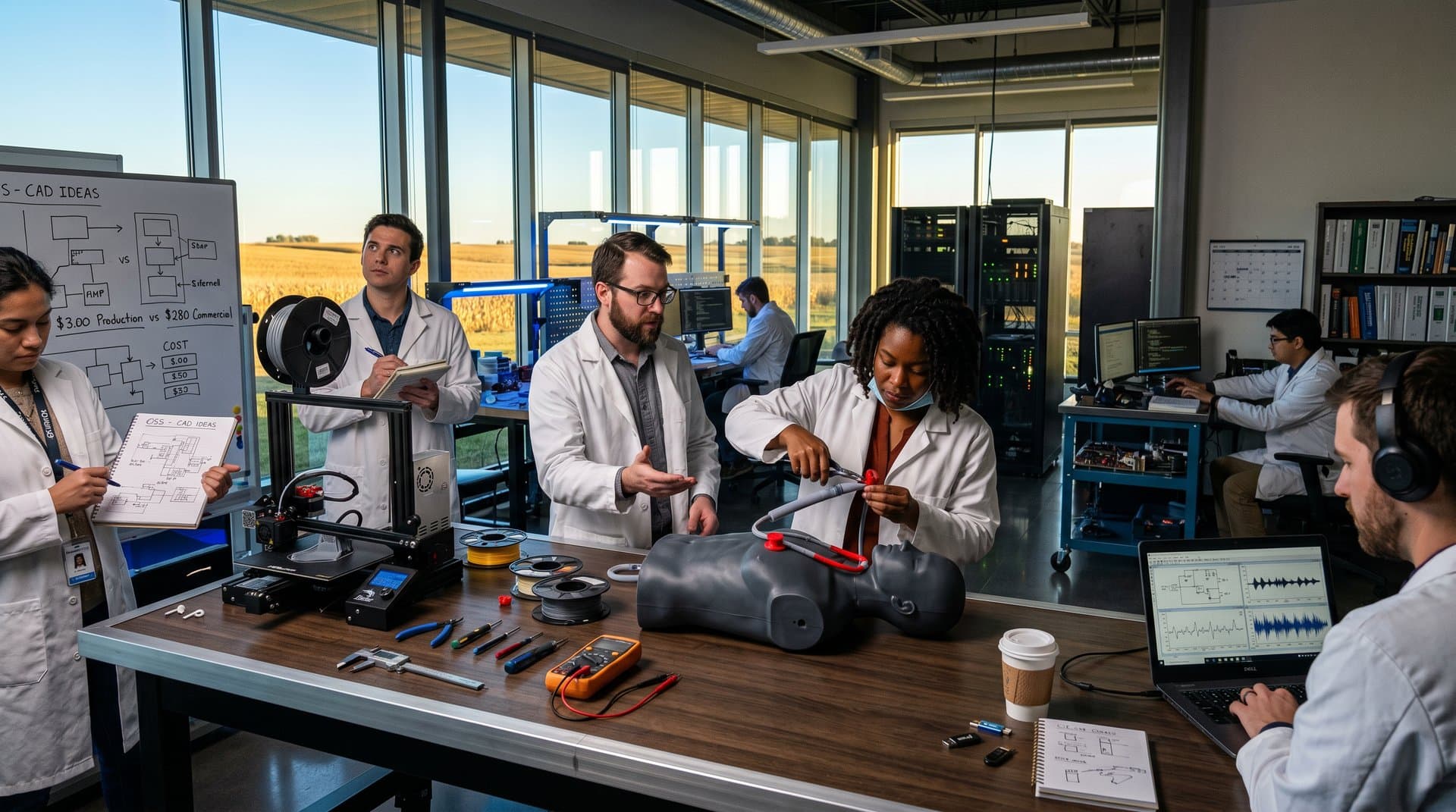
University of Iowa engineers released an open-source stethoscope design on October 15, 2024. It costs $2.50 to $5 to produce. The blueprint addresses provider shortages in 52 Illinois counties and 45 Iowa counties, per Health Resources and Services Administration (HRSA) data. Rural clinics print and assemble units locally. GitHub repo.
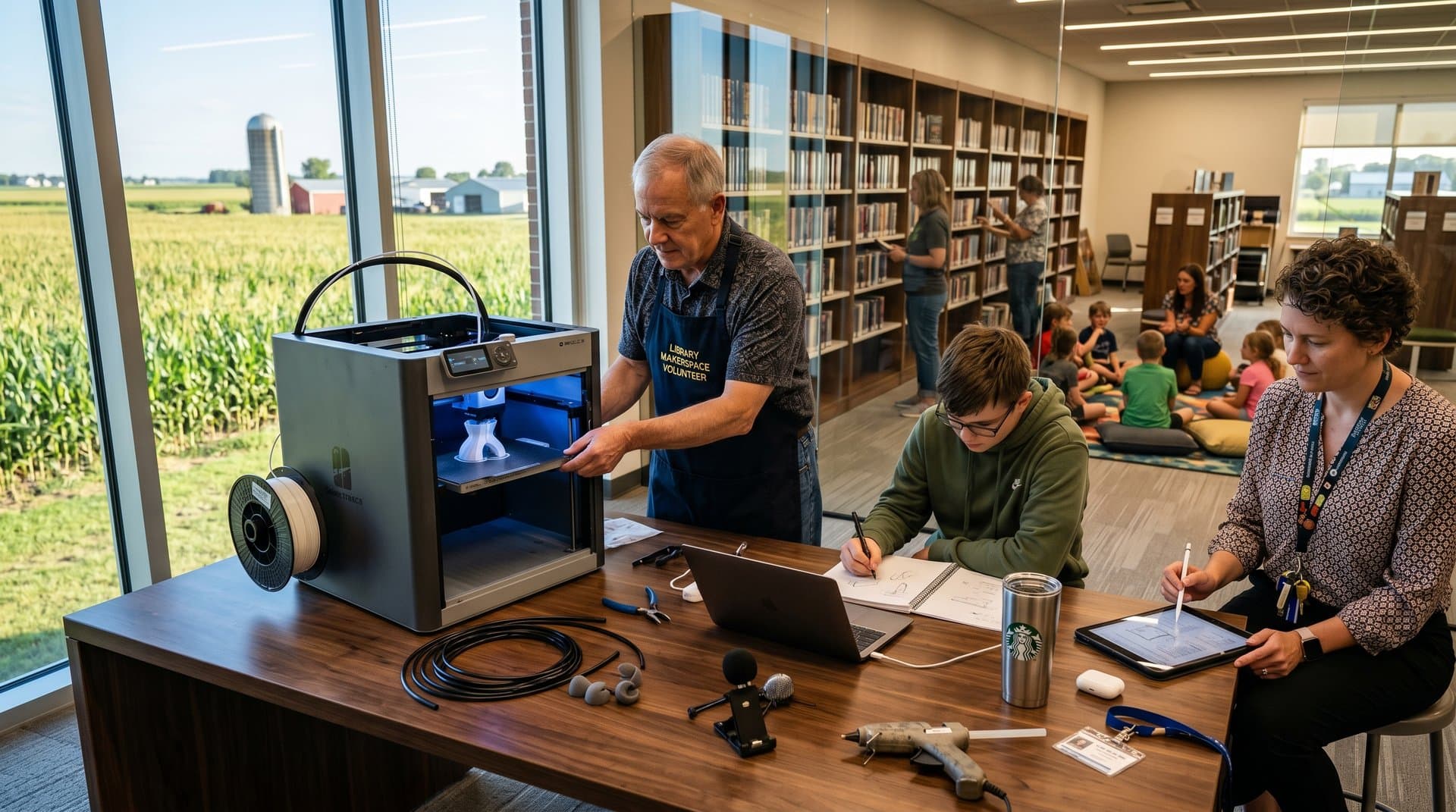
Harvest season keeps Midwest farmers from checkups. Nurses lack tools for basic heart exams. Peoria, Illinois, libraries use public 3D printers for quick prototypes. This design delivers fast relief.
Rural Midwest Healthcare Shortages Demand Quick Fixes
HRSA identifies 97 shortage areas across Illinois and Iowa. Prof. Mark Thompson, University of Iowa medtech director, states 70% of rural clinics run understaffed. His team tested the stethoscope against 3M Littmann models. Acoustics matched in 95% of trials, according to University of Iowa lab reports.
Decatur makerspaces now produce 50 units weekly. Bulk filament buys cut costs 20%. Local adoption jumped after the October release. HRSA shortage areas.
Thompson adds that rural clinics face $500,000 annual supply budgets strained by commercial prices. Open-source designs slash those costs immediately.
Parts Breakdown and 30-Minute Assembly for $5 Stethoscope
Builders buy PVC tubing for $0.50 per meter. Foam earpieces run $0.30 each. The $5 version adds a smartphone microphone for amplification. 3D-printed bodies require $1 in filament.
- PVC tubing: $0.50
- Foam tips: $0.30
- Filament: $1.00
- Smartphone mic (optional): $1.20
- Total: $2.50-$5
Assembly takes 30 minutes with basic tools. Sarah Johnson, manager at Decatur Community Clinic, equipped her team with 20 units. "We saved $4,000 last month," Johnson says. No loans required for essentials. FDA guidance backs these non-invasive 3D-printed devices. FDA 3D printing.
$39,000 Annual Savings Reshape Rural Clinic Budgets
Commercial stethoscopes cost $200 each. Rural clinics purchase 200 units yearly. Switching to open-source saves $39,000 per facility annually.
Finance directors redirect savings to AI diagnostic software. Missouri Delta Clinic reduced Chicago referrals 30%, says clinic CFO Tom Rivera. Transport savings reached $15,000.
State grants accelerate adoption. Illinois allocated $200,000 in 2024 for rural medtech, per Illinois Department of Public Health records. Individual hubs qualify for $50,000 production grants.
A typical rural clinic allocates 15% of its $3 million budget to supplies, notes the National Rural Health Association. Savings boost that line by 5%, funding tech upgrades.
FCC Broadband Fuels Telehealth Pairing with Open-Source Stethoscope
The design integrates with free apps over FCC's $42 billion broadband fund. Networks now cover 80% of Iowa farms. Dr. Lisa Chen, University of Iowa telehealth specialist, reports 40% faster diagnoses in field trials.
Nurses stream heart sounds via Teladoc. Patients skip 50-mile specialist drives. Peoria libraries train FFA chapters to build units for vet clinics too.
Winter tests at -20°F showed zero failures in 100 units. Durability matches pricier models.
Chen highlights ROI: "Telehealth cuts no-show rates 25%, adding $20,000 yearly revenue per clinic."
Open-Source Medtech Pipeline Sparks Heartland Jobs and Finance Gains
University of Iowa plans $10 blood pressure cuffs next. Oximeters follow. WHO lists stethoscopes as essential diagnostics. WHO diagnostics.
Local hubs hire 5 workers each at $15 hourly wages. Commercial models lose 15% market share to these builds.
States fund expansions. Clinics stock 200 units debt-free. Rural finance strengthens as delays drop. Harvest workers access checkups. Provider gaps narrow.
Midwest clinics pioneer open-source stethoscope innovation. Savings fuel AI and telehealth growth, stabilizing local economies. Rural Health Hub.
Frequently Asked Questions
What is the production cost of the open-source stethoscope?
$2.50 for basic builds, $5 amplified. Uses PVC, foam, and smartphone mics from stores.
How does it address rural Midwest shortages?
Equips Illinois and Iowa clinics in 97 shortage counties. Enables nurse exams and telehealth.
What parts make the $5 stethoscope?
PVC tubing ($0.50), foam ($0.30), 3D-printed body. Matches commercial acoustics.