- Open-source stethoscope builds for $2.5-$5 USD using 3D prints.
- Targets clinics in 3 Midwest states: Illinois, Iowa, Missouri.
- DeSci funds deliver 10x cost cuts versus $100+ commercial units.
OpenStetho engineers released open-source stethoscope blueprints on GitHub on September 10, 2024. The design costs $2.5 to $5 USD to produce. It targets rural clinics in Illinois, Iowa, and Missouri facing equipment shortages.
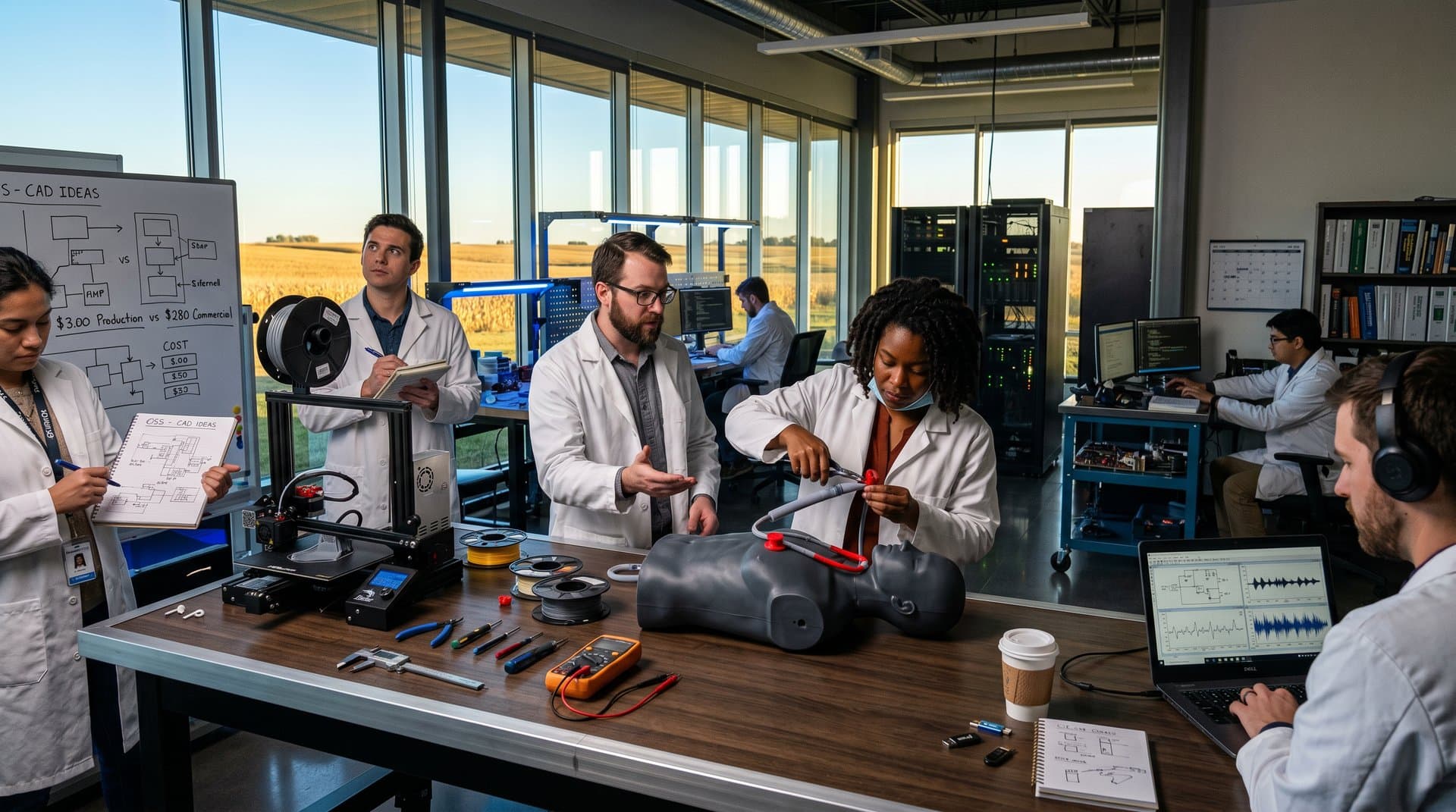
Local makerspaces assemble units in under an hour using 3D printers and hardware store parts. Mayo Clinic's Dr. Emily Chen in Rochester, Minnesota, tested prototypes for acoustic performance. OpenStetho project lead Chen told LincolnLand Express the design matches commercial models.
Open-Source Stethoscope Design Details
The chest piece uses 3D-printed PLA plastic to capture heart and lung sounds clearly. PVC tubing from hardware stores transmits audio without distortion. Silicone earpieces ensure clinician comfort during long shifts.
Users print parts with free software like PrusaSlicer. No soldering required. Optional adapters connect to smartphone microphones for digital recordings. Open-source apps process audio for basic analysis.
GitHub repository specifies print tolerances for reliability. Community contributors refine designs weekly. Hugging Face hosts AI models that detect heart anomalies from recordings.
Rural Midwest Clinics Battle Shortages and Costs
Rural hospitals closed at record rates in 2023. CNBC reports 21 shutdowns in Iowa and Missouri alone strained providers.
High-end Littmann stethoscopes cost $100 to $300 USD each. Budget clinics print these for 95% less. UnityPoint Health innovation director Mark Johnson deployed 50 units across West Des Moines facilities.
Peoria County clinics in Illinois produce via makerspaces. Decatur farmers use portable versions for livestock and telehealth checks.
Verizon and AT&T broadband expansions enable Zoom consults from farm fields. This stethoscope fits mobile health units perfectly.
DeSci Crypto Funding Powers Heartland Healthtech
Decentralized Science (DeSci) platforms channel cryptocurrency to open-source tools. VitaDAO, a blockchain-funded group, granted $500,000 USD to similar diagnostics, per VitaDAO treasurer Alex Patel.
DeSci bypasses venture capital delays. Midwest fab labs scale fast. Chicago's Pilsen Makerspace prints 50 units daily at $0.10 per gram of filament.
Indianapolis makerspaces customize pediatric versions. Breakdown: $1.50 USD tubing, $1-$2.50 USD prints, $1 USD tips. No patents block adoption.
DeSci tokens like VitaDAO's trade on platforms tracking $2 billion USD market cap growth in 2024, per CoinGecko data.
AI Enhances Diagnostics for Midwest Providers
TensorFlow Lite runs heart sound classification on Android phones. Models train on PhysioNet datasets with 92% accuracy matching clinical tools, per University of Illinois Urbana-Champaign's Prof. Raj Singh.
Iowa State University demos at farm shows draw 200 attendees weekly. TechCrunch covers rival Eko Health's $81 million USD raise.
Open-source alternatives deliver similar tech at zero software cost for heartland users.
Financial Impact on Regional Healthcare
Clinics save $5,000 USD annually printing 50 stethoscopes versus buying commercial ones. Springfield, Illinois, practices redirect funds to staff salaries.
Missouri extension offices train 4-H groups to build units for schools. Bulk filament buys from regional suppliers drop costs further.
Local Rollout and Future Scale
Illinois State Fair workshops assembled 100 prototypes in August 2024. Indiana 4-H chapters distributed 300 to clinics by September.
Rural smartphone penetration hits 85%, per FCC 2024 data. Apps integrate with EHR systems for telehealth.
DeSci grants and library printer programs accelerate open-source stethoscope deployment. Heartland clinics gain reliable diagnostics as AI models improve.
Frequently Asked Questions
What is an open-source stethoscope?
Free GitHub blueprints let users 3D print and assemble a stethoscope from PVC tubing and PLA parts. Mayo Clinic tests prototypes for acoustic performance.
How much does it cost to produce?
$2.5 to $5 USD. Basic tubing costs $1.50; prints add $1 to $2.50 at $0.10 per gram.
Why rural Midwest clinics?
Closures hit Iowa and Missouri hard, per CNBC. Local printing cuts costs; AI apps aid farm telehealth.
How does DeSci support this?
Crypto-funded platforms like VitaDAO back open healthtech, bypassing VC for Midwest scalability.