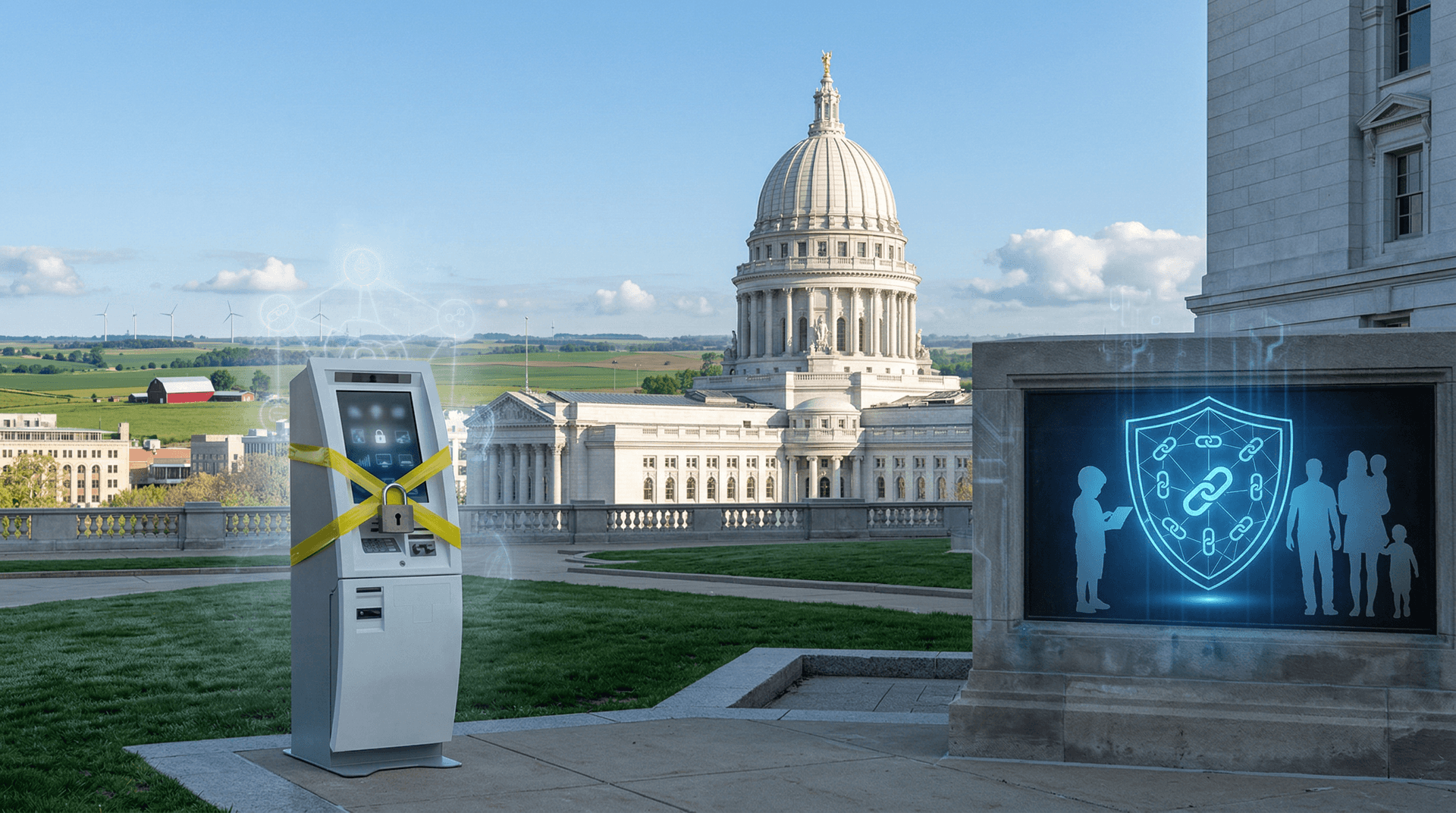
Wisconsin Governor Tony Evers signed Wisconsin crypto regulations on April 10, 2026. The bills cap cryptocurrency ATM transactions at $3,500 and expand sextortion definitions for minors under 18.
Evers approved the measures at a Madison ceremony. Bipartisan lawmakers supported them to combat rising fintech risks.
Crypto ATM Caps Target Fraud
Crypto ATMs allow users to buy Bitcoin or Ethereum with cash. Scammers exploit them for money laundering and charge fees up to 20%.
Operators must register with the Wisconsin Department of Financial Institutions (DFI). They post clear fee notices at kiosks. Violations trigger $10,000 fines per machine, per DFI rules.
DFI recorded 250 complaints in 2025, mostly from Dane and Milwaukee counties. Victims lost cash to fake Bitcoin sales and irreversible transfers.
Madison convenience store owners tested pilot rules, cutting disputes 60%. The $3,500 cap aligns with Illinois standards, aiding cross-state truckers and farmers.
Oshkosh small manufacturers praise the rules. They use crypto for supplier payments, gaining stable cash flow from lower risks.
How ATMs Work in Midwest Shops
Gas stations and malls host these kiosks. Users scan wallet QR codes, insert bills, and receive digital coins instantly.
Fees erode novice profits. A $1,000 purchase can cost $200 extra. DFI data shows rural users suffer most.
New rules mandate transaction logs. DFI audits them monthly to spot patterns like rapid large buys.
Door County farmers report safer equipment trades with Chicago suppliers via crypto.
Sextortion Laws Protect Youth
Sextortion extorts kids with crypto payments after image sharing. Offenders demand Bitcoin to prevent leaks.
Repeat cases with minors under 18 now carry 20-year penalties, per the Wisconsin Department of Justice (DOJ).
DOJ tallied 150 cases in 2025, up 40% from 2024, in Eau Claire, Green Bay, and Wausau.
Meta and Snapchat provided user data to hasten passage. Wisconsin schools launch digital safety classes this fall.
Appleton parents formed watch groups to teach blocking strangers and reporting threats.
Fintech Impacts on Midwest Business
Bitcoin traded at $72,216 on April 10, per CoinMarketCap. A University of Wisconsin study shows 25% of state adults hold crypto.
DFI estimates $5 million USD in annual scam losses. Regulations cut risks for dairy farmers and auto parts makers.
Illinois enacted ATM caps in March 2026. Indiana eyes kiosk fees. The Midwest Fintech Council pushes region-wide standards.
Associated Bank in Milwaukee pilots compliant kiosks with 5% fees, attracting small businesses.
Stevens Point farm credit unions offer crypto wallets. Balances rose 12% since January, per FDIC data.
Regional Safeguards Build Trust
Rural Starlink internet usage grew 30% last quarter, per Federal Communications Commission. Improved access advances secure fintech.
Evers stated, "Wisconsin protects its own." La Crosse parents cheer the sextortion focus.
DOJ partners with Microsoft on AI threat detection. PwC forecasts 15% Midwest crypto adoption by 2028.
Chicago's MathWallet raised $20 million USD for secure apps. Wisconsin credit unions roll out ETH savings plans.
Kenosha manufacturers integrate blockchain for supply chains under safe regulations.
Business Owners Weigh In
Janesville hardware store owner Mike Larson swapped $2,000 USD via ATM last month. "No more fee shocks," he said.
Fond du Lac agrotech firms use crypto for seed imports. Caps limit overexposure.
U.S. Bank trains Superior staff and stocks education flyers.
Future of Wisconsin Crypto Regulations
DFI schedules annual reviews with user input.
Midwest governors meet in June to discuss uniform ATM standards.
These Wisconsin crypto regulations mature fintech for heartland communities. Farmers, factories, and families secure better tools amid tech shifts.