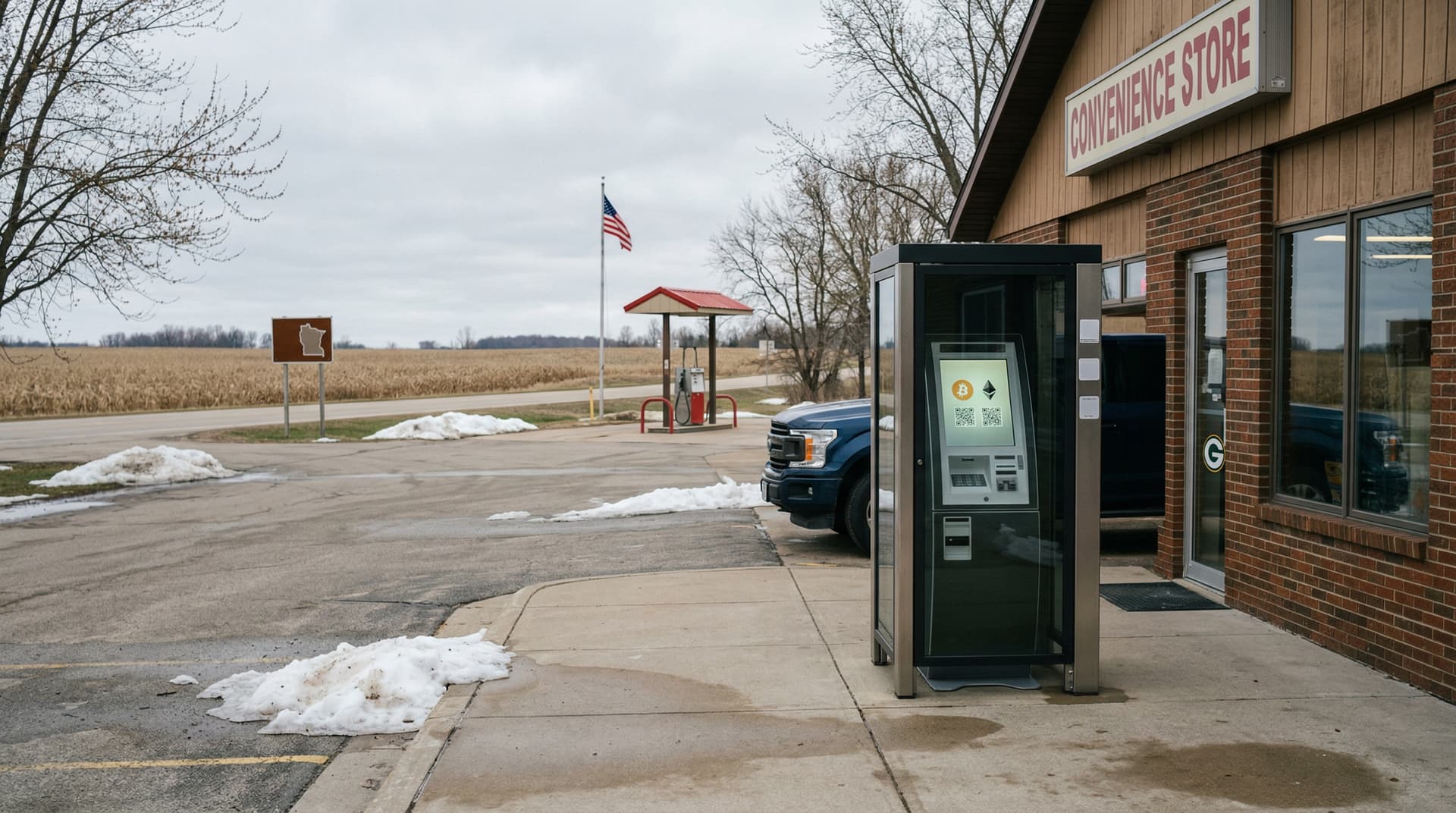
Wisconsin Governor Tony Evers signed the Wisconsin crypto kiosks law on April 10, 2026. It regulates kiosks after scammers stole $5 million USD last year, per Wisconsin Department of Financial Institutions (DFI) reports. Retailers gain legal immunity from fraud liability.
Key Rules in Wisconsin Crypto Kiosks Law
Kiosk operators must register with DFI within 30 days. Machines cap daily transactions at $1,000 USD without customer ID. Fees cannot exceed 15%, down from the 25% average DFI documented.
Kiosks display scam warnings on screens. Compliant retailers get full protection. Operators face $10,000 USD fines per violation.
DFI logged 1,200 complaints in 2025. Fraudsters hit kiosks at rural gas stations and urban stores, laundering fake investment money.
How Crypto Kiosks Work and Scam Risks
Cryptocurrency kiosks, or Bitcoin ATMs, let users buy Bitcoin or Ethereum with cash. Customers scan wallet QR codes, insert bills, and get coins instantly. Blockchain blocks reversals, aiding scammers.
In Wisconsin, fraudsters posed as advisors. They tricked seniors into kiosk buys for fake high-yield funds. Victims lost $5 million USD, DFI data shows.
Midwest sites prove easy marks. Coin ATM Radar counts 2,500 kiosks in Wisconsin, Illinois, and Indiana. Cash from farms and factories draws crooks.
Protection Boosts Midwest Businesses
Madison store owner Jim Harlan praised the rules. "This law shields small shops from scam fallout," Harlan said on April 10, 2026.
Regulated kiosks boost traffic. Ohio's 2025 rules raised retailer revenues 20%, per National Federation of Independent Business (NFIB) surveys. Wisconsin expects the same.
Bitstop and Bitcoin Depot pledged compliance. They add $500 USD ID scanners per kiosk and $200-400 USD monthly AI software.
Market Context and Bitcoin Surge
Bitcoin hit $73,170 USD on April 10, 2026, up 1.6% per CoinMarketCap. Fear & Greed Index reached extreme fear at 16, fueling scams.
Kiosks handle 5% of U.S. retail crypto buys, Federal Reserve data shows. National volume topped $50 billion USD last month.
Midwest farmers consider crypto for gear sales. John Deere tests blockchain for parts tracking, aiding rural kiosk payments.
Tech Upgrades Combat Fraud
New software uses AI to spot suspicious buys. Chainalysis partners with DFI, slashing scams 80% in tests.
Machines print receipts with reversal info and DFI hotlines, rolled out April 10, 2026. FBI tallied 300 Midwest kiosk frauds in Q1 2026.
Wisconsin matches FinCEN guidelines for even enforcement.
Regional Impact and Next Steps
Indiana drafts similar bills after $3 million USD losses. Iowa covers exchanges but ignores kiosks.
Chambers of commerce hail it as pro-business. The law balances crypto growth with safety for stores and farms.
Enforcement begins April 15, 2026. DFI schedules quarterly audits.
The Wisconsin crypto kiosks law strengthens Midwest economies. It blocks digital threats and opens secure crypto to truckers and manufacturers.