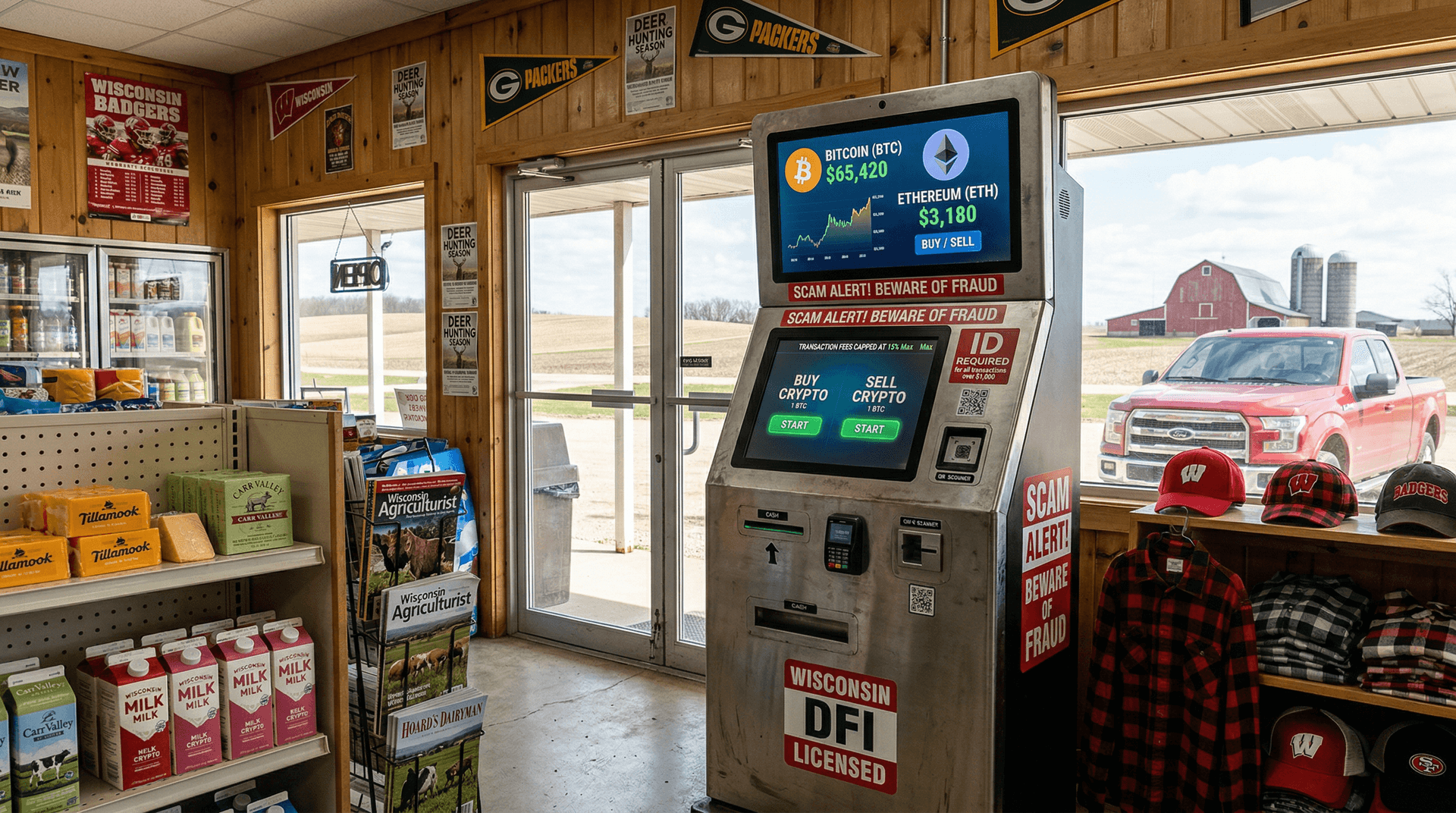
Wisconsin Governor Tony Evers signed the Wisconsin crypto kiosks law on April 11, 2026. The rules target scams at machines in gas stations and stores across the state. WSAW reported the bill's passage after strong bipartisan support.
Operators must register with the Department of Financial Institutions (DFI). Kiosks require customer ID for transactions over $1,000. Fees cap at 15%, with clear screen disclosures before every buy. The law bans anonymous purchases above $900 per day. Enforcement starts June 1, 2026.
Cryptocurrency Regulations Target Rural Scams
Wisconsin counts over 400 crypto kiosks, concentrated in rural Marathon and Dane counties. Scammers stole $2.5 million from users last year, according to the state attorney general's office. Central Wisconsin farmers lost cash meant for tractor repairs and seed purchases.
New rules demand real-time transaction logs sent to DFI regulators. Kiosks must display scam warnings in English and Spanish on startup screens. Operators face fines up to $10,000 per violation, plus license revocation for repeat offenses.
State Sen. Howard Marklein, R-Spring Green, sponsored the bill. Kiosk numbers grew 30% since 2024, fueled by Bitcoin's price surge past $100,000. Marklein said during debate, "This balances innovation with safety for our farm families."
The law responds to a 2025 DFI report showing 70% of kiosk scams hit users under $50,000 annual income, many in agriculture-dependent areas.
Fintech Scams Hit Midwest Neighbors Hard
Illinois considers matching rules after Chicago-area kiosk scams cost $1.8 million last quarter, per the Illinois Department of Financial and Professional Regulation. Iowa and Missouri have no fee caps or ID mandates, drawing Wisconsin shoppers across state lines.
Blockchain analytics firm Chainalysis praised the ID requirements. Their report notes such measures trace 85% of illicit funds, up from 40% without verification. The Wisconsin law sets a Midwest standard, forcing fintech firms to develop compliant software.
Rural broadband enables enforcement. Verizon data from April 11, 2026, shows 85% high-speed internet coverage in key Wisconsin counties. This supports instant log uploads and remote kiosk monitoring.
Operators like Bitcoin Depot plan upgrades. They invest $5 million in software meeting DFI specs, including geofencing to block high-risk IP addresses.
Midwest Consumer Protection Ties to Agriculture
Dairy farmers in Green County use kiosks to convert payments from Asia exports into stablecoins. This avoids 7% bank wire fees. Wisconsin dairy exports reached $150 million last harvest, per U.S. Department of Agriculture (USDA) figures.
Scams hit 5% of these transactions in 2025, per DFI audits. New rules secure funds for seeds, fertilizers, and equipment leases. Bitcoin prices correlate 0.45 with corn futures, according to CME Group data, linking crypto to farm incomes.
Wisconsin allocated $20 million in the 2026 budget for rural kiosk security grants. Spectrum expands fiber optic to 15 counties, boosting transaction speeds to under 10 seconds.
A Marathon County co-op with 200 members reports 40% of farmers now hold crypto for hedging weather risks. The law prevents losses that could idle $10 million in machinery.
Boosts Confidence for Heartland Users
A University of Wisconsin poll from March 2026 found 62% of adults fear crypto scams. The new law requires operators to provide 24/7 support hotlines staffed by licensed agents.
Milwaukee manufacturers embrace fintech. Startup accelerator Gener8tor committed $50 million to blockchain ventures. Associated Bank installs compliant kiosks in 20 branches, starting in Waukesha.
Small businesses benefit too. A Wausau auto parts supplier uses kiosks for quick supplier payments in USDC, saving $15,000 yearly in fees, per company CFO statements.
Outlook: Safer Fintech Growth in Wisconsin Crypto Kiosks
No federal rules govern kiosks yet. Wisconsin's law influences 12 Midwest states, including talks in Minnesota and Indiana. Fintech lobbyists at the Wisconsin Bankers Association predict 20% kiosk growth by 2027.
Bitcoin Depot rolls out AI fraud detection, reducing false positives by 40%, according to Elliptic analytics. DFI launches a public scam tracker portal on June 1, 2026.
These steps shield Midwest livelihoods from Des Moines to Detroit. Farmers, manufacturers, and families gain trusted access to crypto, accelerating adoption without the scam risks.