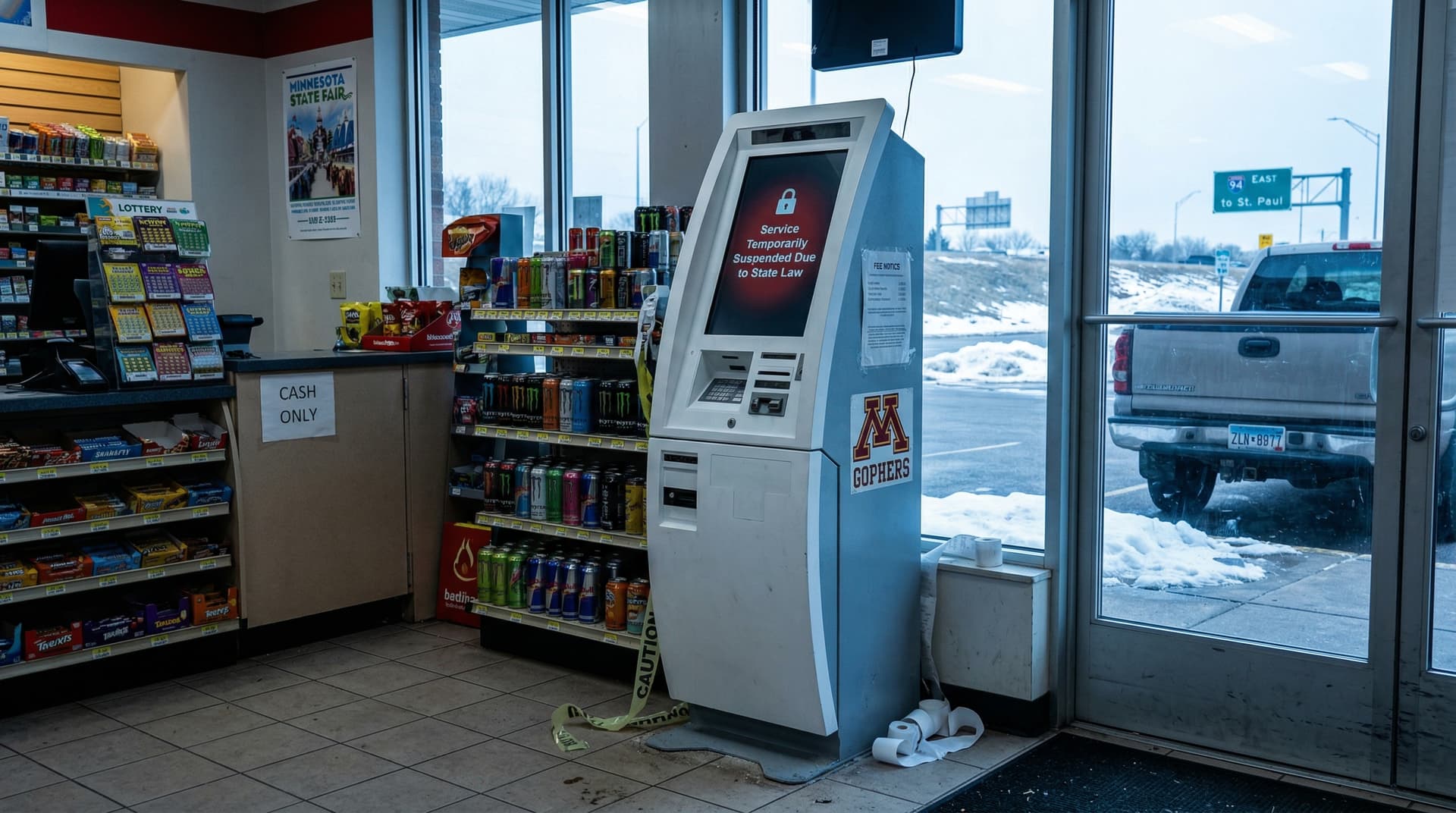
Minnesota Senate approved the MN crypto kiosks ban on April 11, 2026. Lawmakers targeted scams that cost residents $5.2 million USD in 2025, according to the state Attorney General's office. The bill now heads to the House for a vote.
Scammers exploited kiosks for fake crypto sales with sky-high fees. Rural Minnesotans without bank accounts fell victim most often. Senate leaders made protecting these users their top priority.
MN Crypto Kiosks Ban Details
The new law blocks installation of new kiosks statewide. It also requires operators to shut down existing machines by July 1, 2026. Violators face $10,000 USD fines per kiosk, enforced by the Minnesota Department of Commerce after public hearings in St. Paul.
Bitcoin ATMs typically charge 10-20% fees on cash purchases of Bitcoin or Ethereum. Iron Range counties in northern Minnesota depended on them for easy access. Senators passed the measure 45-22 along mostly party lines.
Supporters, including the Minnesota Bankers Association, push secure bank apps as safer alternatives. Critics warn the ban could deepen financial exclusion for the state's 4% unbanked population, per Federal Deposit Insurance Corporation data.
Crypto Scams Driving the Ban
Minnesota logged 1,200 kiosk-related complaints in 2025, Federal Trade Commission records show. Victims purchased crypto that scammers made disappear instantly. Fraudsters targeted seniors in Duluth and Rochester hardest.
Chainalysis reported $1.1 billion USD in U.S. crypto scams for 2025. Kiosks handled 15% of those cases. New York and California already imposed similar outright bans.
Local police departments failed to trace cash transactions on blockchains effectively. The MN crypto kiosks ban funnels users toward regulated exchanges with better oversight.
Midwest Fintech Shifts
Neighboring Illinois proposed kiosk restrictions last month. Iowa lawmakers debate fee caps this session.
Small towns like Worthington, Minnesota, and Ottumwa, Iowa, have few banks. Kiosks filled that void until now. Leading fintechs promote mobile wallets to replace them.
Cash App and Coinbase target rural users with easy onboarding. Pew Research Center data shows 25% higher Midwest crypto app adoption in early 2026 compared to coasts.
Minneapolis feels minimal disruption from the change. Chicago's fintech sector expands through apps alone. Small businesses that accepted kiosk payments must adapt quickly.
Bitcoin traded at $73,568 USD on April 11, up 0.5% that day, CoinMarketCap reports. Ethereum climbed 2.5% to $2,310.10 USD.
Scammers Target Digital Channels
The FBI forecasts a rise in app and social media scams post-ban. Agency data already showed 40% more phishing attacks in 2025. Fake wallet apps strike Android users frequently.
Telegram peer-to-peer scams cost Midwest victims $2.8 million USD last quarter, state AG reports confirm. Regulators now deploy AI tools for real-time monitoring.
DeFi platform hacks totaled $1.7 billion USD globally in 2025, Chainalysis states. Minnesota plans full crypto business licensing next year.
Regulated exchanges use KYC checks to block much fraud. Unregulated peer-to-peer trades remain a risk.
Regional Rules Tighten
Missouri banned high-fee kiosks in Kansas City last year. Indiana demands $50,000 USD bonds from operators. Ohio caps fees at 7%.
Illinois Governor J.B. Pritzker signed limits in March 2026. The Great Lakes Finance Council coordinates Midwest-wide policies.
Crypto adoption tracks Iowa soybean supply chains closely. Chicago attracted $450 million USD in Q1 2026 fintech investments, PitchBook tracks.
Midwest farmers hedge corn futures with Bitcoin. Stablecoins like USDC speed ag payments from days to hours, Deloitte analysis finds. Minnesota grain elevators report 30% faster settlements since 2025.
Tech Boosts Rural Access
Trust Wallet rolled out biometric logins for farm users. Hardware wallets like Ledger protect co-op earnings from theft.
Elliptic's AI detects kiosk-like fraud with 95% accuracy. States partner with the firm for enforcement.
Federal Reserve pilots CBDC trials in Midwest banks. USDC processes $35 billion USD daily volume now.
Economic Effects in Minnesota
Kiosks supported 200 jobs for Minnesotans. State retraining programs target fintech roles, which grew 15% per Bureau of Labor Statistics.
Gas stations hosted 60% of kiosks and collected placement fees. Owners switch to point-of-sale crypto systems from Square.
Pipestone County's Bitcoin miners produce $20 million USD yearly using cheap wind power. Minnesota collected $45 million USD in crypto taxes for 2025.
Small manufacturers in Rochester lose quick cash-to-crypto options. They turn to payroll apps with stablecoin payouts.
Next for MN Crypto Kiosks Ban
Minnesota House votes by April 25, 2026. Governor Tim Walz backs consumer safeguards. Possible amendments allow low-fee kiosks under strict licenses.
Federal rules loom larger. Midwest states blend crypto education, fintech innovation, and tight rules to serve rural users safely.