By Daniel Cooper Senior Correspondent April 11, 2026
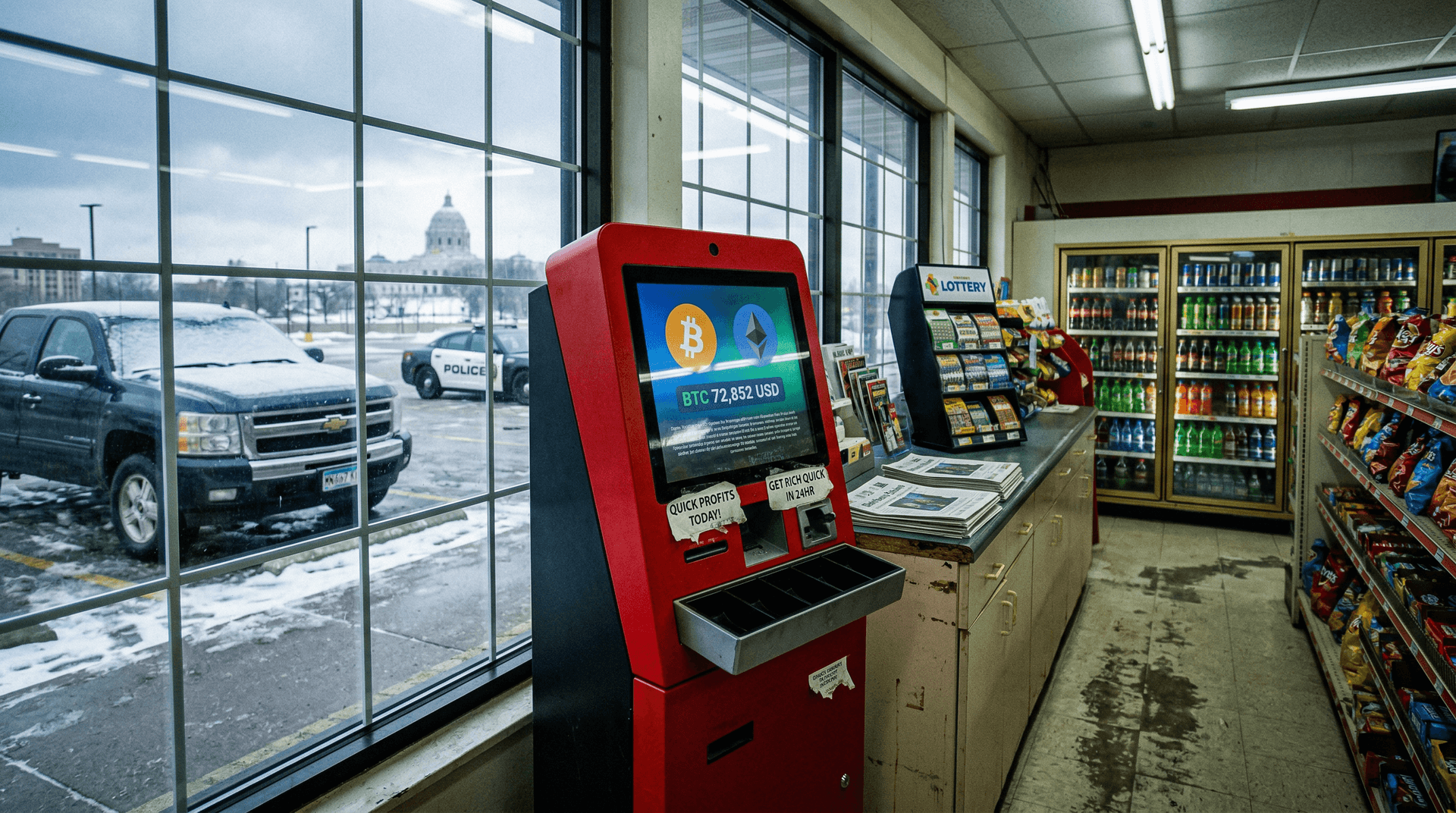
Minnesota law enforcement urged House representatives on April 11, 2026, to approve a statewide crypto kiosks ban. Officials cited over 500 scams linked to these machines in 2025. Victims lost 2.5 million USD, according to the Minnesota Department of Commerce.
Sheriff Mike Hansen of Hennepin County testified before the House Commerce Committee. He described kiosks as easy scam tools placed in gas stations and convenience stores. Users pay high fees without understanding the risks.
Scam Tactics Target Midwest Shoppers
Scammers slap fake signs on kiosks promising quick Bitcoin riches. Victims scan QR codes and send funds straight to fraudsters. The Minnesota Attorney General's Office tracked 1,200 such cases since January 2024.
Rural counties like Stearns saw scam reports jump 35% last year, per county sheriff records. Farmers and small business owners bore the brunt. Kiosks charge up to 20% fees, as detailed in a March 2026 Federal Trade Commission report.
Deputy Attorney General Lisa Chen testified, "These machines prey on trust in everyday convenience stores." She demanded a full ban to stop the fraud.
Crypto Kiosks Spread Across the Heartland
Minnesota hosts over 400 kiosks, mostly in Minneapolis and St. Paul. Operators like Bitcoin Depot and Coinhub argue they serve unbanked residents who need quick crypto access.
David Patel, Coinhub vice president, opposed the crypto kiosks ban. He pointed to Bitcoin trading at 72,852 USD on April 11, 2026, per CoinMarketCap data. Patel claimed kiosks fill a gap for cash-to-crypto conversions.
Neighboring states report similar woes. The Better Business Bureau logged 300 complaints in Iowa and Wisconsin during Q1 2026 alone.
Rural Minnesotans Suffer the Most
Many rural residents lack crypto knowledge but catch national hype from TV ads. A Rochester scam ring stole 150,000 USD from 50 seniors in March 2026, per local police.
Illinois kiosk complaints climbed 40% in 2025, state attorney general records show. Missouri lawmakers introduced a matching ban bill on April 5, 2026. University of Minnesota economist Dr. Sarah Kline calculated average victim losses at 5,000 USD per incident.
"Heartland families can't afford these financial hits," Kline told the committee.
Blockchain Tech Enables Irreversible Fraud
Kiosks use touchscreens linked to blockchain wallets. Customers insert cash and receive a QR code for digital coins. Blockchain's design makes transactions final. No refunds possible.
Scammers generate fake wallets on the spot. Funds disappear instantly into untraceable networks. The SEC fined three kiosk operators 1.2 million USD in February 2026 for misleading advertisements.
Bill HF 2456 proposes 50,000 USD fines per illegal kiosk. It requires operator licenses and caps fees at 5%.
Market Volatility Heightens Kiosk Risks
Crypto price swings make kiosks even riskier. The Fear and Greed Index dropped to 15 on April 11, 2026, per Alternative.me, after Bitcoin fell 10% that week.
Chicago trading desks noted kiosk usage spikes during dips. Desperate buyers pay steep premiums hoping for rebounds. U.S. Bank in Minneapolis reported a 15% rise in its crypto app users during Q1 2026.
Northern Minnesota's spotty broadband forces reliance on cash kiosks. Lawmakers must weigh crypto access against consumer safety for unbanked farmers and factory workers.
Why Minnesota Needs a Crypto Kiosks Ban
These machines hit Midwest manufacturing towns hard. In St. Cloud, a kiosk scam drained 75,000 USD from auto parts workers last quarter, per chamber of commerce data. Small banks like Affinity Plus Federal Credit Union lost customers to kiosk fees.
Agricultural co-ops experiment with crypto for soybean sales. But scams erode trust. A 2026 Deloitte report found 25% of Midwest farmers interested in stablecoins like USDT, trading at 1.00 USD.
Regional banks push alternatives. Bremer Bank's app offers fee-free crypto buys verified by FDIC insurance. This shift could save families thousands.
Legislative Vote Approaches
The House Commerce Committee votes on April 18, 2026. Chair Rep. Lisa Demuth supports the crypto kiosks ban, citing Duluth victim stories from her district.
Rep. Elena Vargas prefers ID checks and fee limits over a full ban. Iowa filed a similar bill on April 10, 2026, targeting 250 kiosks statewide.
Business Ripple Effects in the Midwest
Retailers pocket 10% commissions from kiosks. St. Cloud store owners scramble for replacements like digital payment kiosks. Coinbase reported 20% user growth in the Midwest during 2026.
Farmers turn to stablecoins for cross-border payments. BlackRock's Bitcoin ETF manages 15 billion USD as of April 2026, drawing regional investors.
Automation in manufacturing amplifies needs. Factories in Rochester use blockchain for supply chains but warn workers off kiosks.
Protecting Consumers: Next Steps
The FDIC alerted 2 million Midwest households about kiosk dangers in a March 2026 bulletin. Financial advisors recommend bank apps with built-in fraud detection.
Minnesota's crypto kiosks ban could trigger heartland-wide rules. In a 2 trillion USD crypto market, this choice will safeguard family budgets and small business cash flow for years ahead.