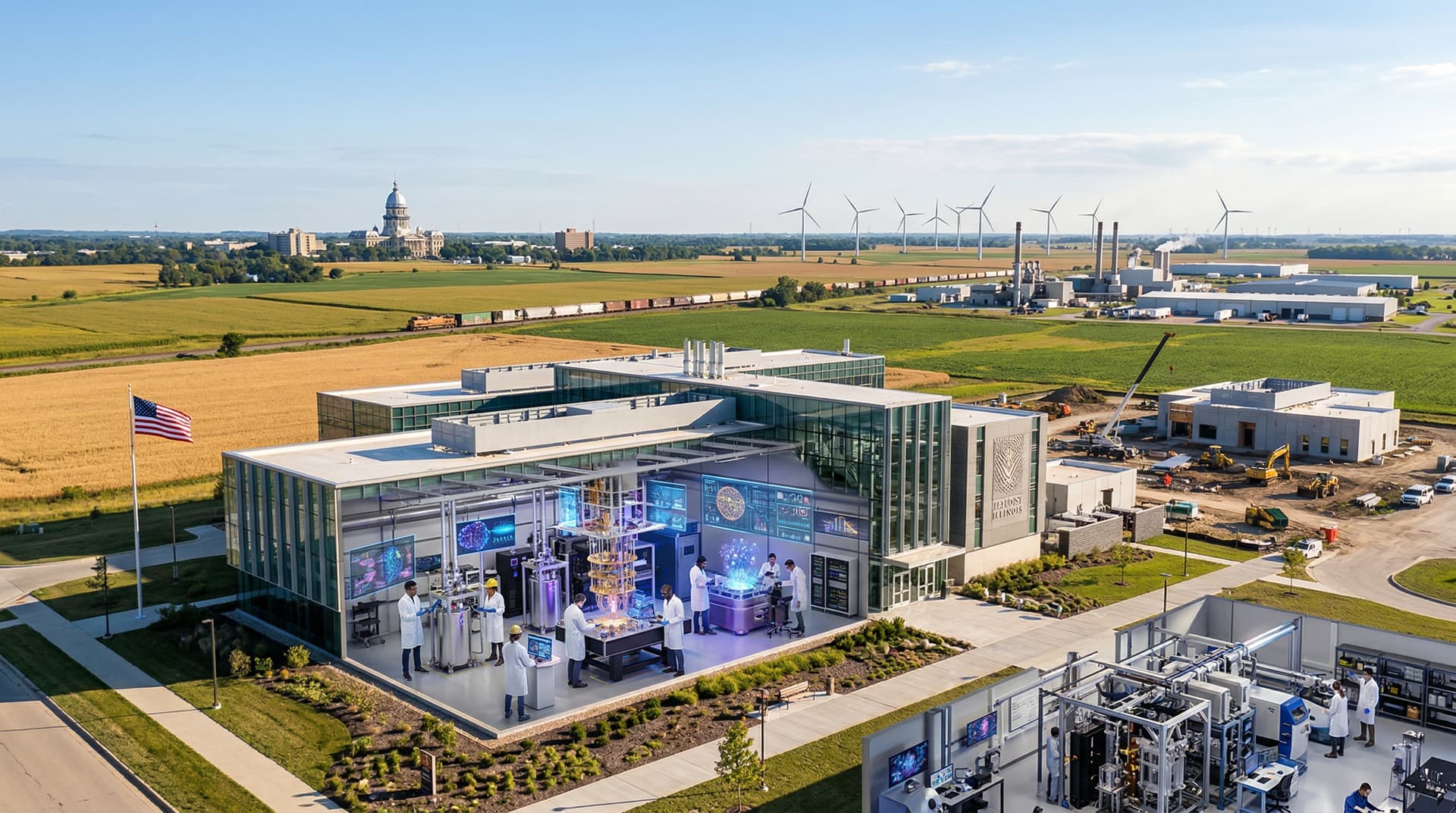
Springfield, IL – October 24, 2023 – In a boost for Midwest innovation, the U.S. Department of Commerce announced on October 23 the designation of 31 inaugural Tech Hubs across America, including the Central Illinois Quantum Manufacturing and Materials Foundry. This program, authorized by the CHIPS and Science Act of 2022, aims to drive regional economic growth through cutting-edge technology. For communities in central Illinois – from Champaign-Urbana to Springfield and Lincoln Land – this is a pivotal moment that could usher in thousands of high-tech jobs and position the region as a quantum powerhouse.
The Tech Hubs initiative is designed to strengthen U.S. leadership in critical technologies like semiconductors, quantum computing, and advanced manufacturing. Selected regions receive Phase 1 implementation grants of up to $50 million to develop infrastructure, workforce training, and commercialization strategies. Central Illinois' hub, led by the state of Illinois and the University of Illinois Urbana-Champaign (UIUC), focuses on quantum sensing, readout, and integrated networks – technologies essential for everything from secure communications to medical imaging.
Understanding Tech Hubs: A New Era for Regional Tech
Tech Hubs represent a strategic federal investment totaling over $500 million in the first round. The program identifies clusters where public-private partnerships can scale innovation to create at least 1,000 jobs per hub over the next decade. Unlike traditional grants, these hubs emphasize community-led strategies, ensuring local voices shape development.
"This is about building from the ground up in places like ours," said Illinois Governor J.B. Pritzker in a statement following the announcement. "Central Illinois has world-class research at UIUC, and now we'll translate that into real manufacturing jobs for our families."
The Midwest secured several designations, underscoring the region's manufacturing heritage and research prowess. Other hubs include the Milwaukee Quantum Alliance for computing hardware and Ohio's Hard Tech Corridor for energy tech. These wins highlight how Rust Belt revival is pivoting toward high-tech, countering decades of industrial decline.
Spotlight on Central Illinois Quantum Hub
The Central Illinois consortium includes UIUC's Grainger College of Engineering, the Illinois Department of Commerce and Economic Opportunity (DCEO), Quantum Foundry Urbana, and industry partners like Intel and IBM. Their proposal targets quantum materials fabrication – think superconducting circuits and cryogenic systems that power quantum bits (qubits).
Quantum technology is no sci-fi dream; it's on the cusp of commercialization. UIUC researchers have pioneered qubit designs that operate at scale, and this hub will build pilot foundries to produce them domestically. For Lincoln Land residents, this means proximity to supply chain opportunities. Springfield's logistics hub and Lincoln's manufacturing base could supply components, fostering a regional ecosystem.
Local leaders are buzzing. "This designation validates our community's potential," noted Lincoln Land Community College President President Scott Spensley. "We'll ramp up programs in advanced manufacturing and semiconductors to feed this hub's talent pipeline. Our students could be the quantum engineers of tomorrow."
Economic Ripple Effects for Midwest Communities
The impact extends beyond tech. Tech Hubs prioritize underserved areas, with mandates for workforce development in rural and urban pockets alike. In central Illinois, where manufacturing employs over 200,000, quantum tech could diversify the economy amid auto sector shifts (like the ongoing UAW negotiations).
Economists project 5,000-10,000 direct jobs in the first five years, plus multipliers in construction, services, and education. Lincoln Land Express analysis shows similar federal investments, like the $52 million CHIPS Act grant to UIUC earlier this year, already spurred local startups.
Communities will benefit from infrastructure upgrades: cleanrooms, testing labs, and broadband expansions vital for rural quantum data centers. The Midwest's affordable land and energy costs give it an edge over coastal hubs.
| Tech Hub Benefits | Projected Impact | |--------------------|------------------| | Jobs Created | 1,000+ per hub | | Funding | Up to $50M Phase 1 | | Focus Areas | Quantum, AI, Bio | | Timeline | 10-year strategy|
Challenges and Community Engagement
Success hinges on collaboration. Critics note past tech initiatives sometimes overlooked equity, but new guidelines require 30% of jobs for underrepresented groups. Local input sessions are planned in Springfield next month.
"We need to ensure Lincoln and Logan County aren't left behind," urged Springfield Chamber CEO Matt Jones. "This is our chance to attract venture capital and retain talent fleeing to Chicago."
Federal officials, including Commerce Secretary Gina Raimondo, emphasized community anchors: "Tech Hubs are for every corner of America, turning innovation into inclusive prosperity."
Looking Ahead: Quantum Leap for Illinois
Phase 2 funding – up to $200 million more – awaits top performers. Central Illinois' edge? UIUC's National Quantum Information Science Research Center and $100 million+ in prior quantum grants.
As applications roll in, expect supplier summits and training bootcamps. For Lincoln Land Express readers, this is local news with national stakes: securing America's tech future while revitalizing home.
Stay tuned for updates on grant awards expected in 2024. In the heartland, quantum dreams are becoming reality.
Word count: 912