By Daniel Cooper April 11, 2026
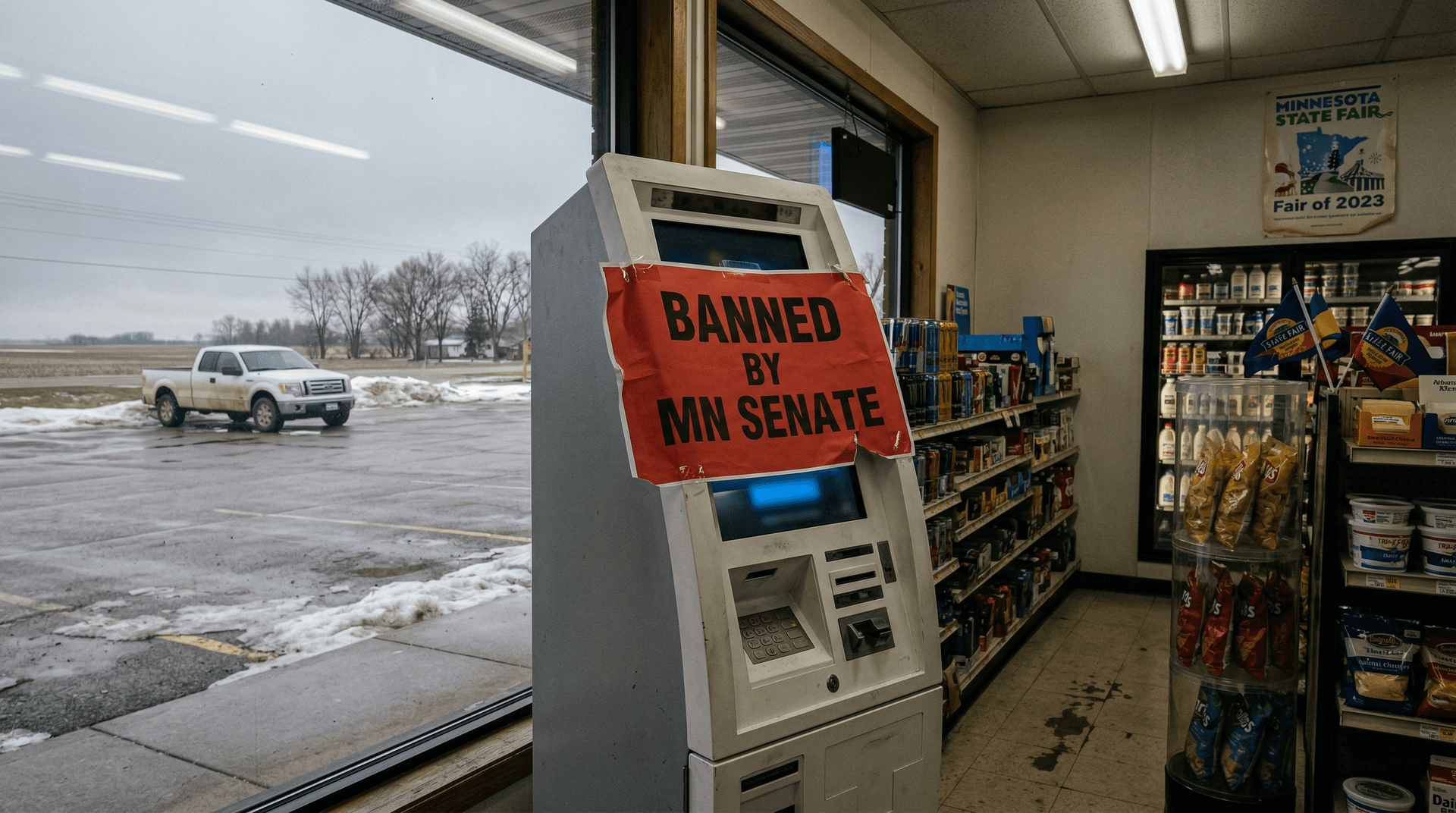
The Minnesota Senate passed the crypto kiosk ban on April 11, 2026. Lawmakers targeted scams from high-fee machines in convenience stores and gas stations across the state. The bill now heads to the House.
Supporters highlighted fraud risks. Scammers pose as tech support and push victims to buy crypto at 20% markups. Senate Bill SF 2847 bans all kiosks statewide.
Crypto Kiosk Ban Details
These machines let users swap cash for Bitcoin or other cryptocurrencies. Fraudsters steer victims to kiosks through online scams.
Minnesota Attorney General Keith Ellison testified on April 10. His office recorded 1,200 crypto scam complaints in 2025, with losses of $45 million USD. Kiosks appeared in 40% of cases, Ellison said.
Operators charge fees up to 20%, according to 2025 data from the Minnesota Department of Commerce.
Small Midwest towns relied on these kiosks. Rural areas lack banks, so farmers used them for quick crypto access to hedge crop prices. High fees drained cash from family operations in places like Worthington and Fergus Falls.
Bitcoin Market Holds Steady Amid Ban
Bitcoin traded at $72,743 USD on April 11, up 1.6% that day, per CoinMarketCap. Ethereum hit $2,233.65 USD, gaining 2.4%. The Fear & Greed Index sat at 15, signaling extreme fear, Alternative.me data showed.
XRP reached $1.35 USD, up 0.8%. BNB stood at $606.06 USD, rising 1.3%. USDT stayed at $1.00 USD.
Minnesota traders shifted to online exchanges. Coinbase reported 15% more traffic from state IP addresses last month, SimilarWeb data confirmed. Lower fees on platforms help small businesses avoid kiosk rip-offs.
Scammers Shift Tactics After Crypto Kiosk Ban
Fraudsters now turn to peer-to-peer apps like LocalBitcoins. Telegram channels host direct trades.
Chainalysis tracked $2.8 billion USD in global crypto scams for 2025. Minnesota ranked high per capita among Midwest states for losses.
Rural Minnesotans face hurdles without kiosks. Many small towns have no nearby banks. Farmers in the Red River Valley previously used kiosks to buy Bitcoin fast during harvest volatility.
Scam Prevention Tech Steps Up for Midwest
Elliptic released AI wallet scanners on April 9. Artificial intelligence tools spot scam-linked addresses in seconds.
CipherTrace uses machine learning to monitor transactions. Adoption rose 25% in the Midwest last year, company figures show.
U.S. Bank in Minneapolis tested blockchain verification tools. The pilot cut scam transfers by 30% in early trials.
These tools protect everyday users. A Decatur, Illinois, grain co-op adopted Elliptic scanners and blocked $200,000 USD in potential fraud last quarter.
Fintech Regulations Tighten Across Midwest
Minnesota joins Iowa and Missouri in curbing kiosks. Iowa fined operators $500,000 USD in March 2026 for unlicensed machines.
Illinois lawmakers proposed kiosk limits last week. Farmers now hedge corn futures with crypto on regulated platforms. Fees drop to 1%, CME Group data reveals.
St. Paul manufacturers accept Bitcoin payments. The ban pushes users to secure online wallets and Chicago-based fintech apps.
Farmers & Merchants Bank in Springfield, Illinois, launched USDC on-ramps. Circle processes transactions at 0.5% fees, bank officials said.
Rural Broadband Enables Crypto Shift
Online crypto trading requires reliable internet. Only 75% of Minnesota farm homes have high-speed broadband, FCC data from April shows.
Starlink deployed 5,000 terminals in northern Minnesota since January. Download speeds exceed 150 Mbps, aiding remote trades.
State leaders allocated $100 million USD for broadband expansion. Farmers now swap BTC during busy seasons without driving to town.
A Polk County dairy farmer reported saving 15% on fees by using Coinbase via Starlink, per local news interviews.
New Fintech Firms Fill the Gap
TRM Labs secured $70 million USD in February for Midwest growth. Demand spikes for compliance software as bans spread.
Minneapolis startup SecureChain provides app-based trades. It verifies users with facial recognition and geolocation.
Evansville factories pay suppliers in stablecoins. This hedges against dollar swings in manufacturing costs.
Local banks integrate these tools. A Bloomington credit union added crypto ramps, drawing 200 new accounts in Q1 2026.
Crypto Kiosk Ban Next Steps
The House votes next week. Governor Tim Walz backs the bill. It takes effect July 1, 2026, if signed.
AI scam detectors now reach 95% accuracy, MIT tests from March confirmed. Fintech regulations and scam prevention tech make crypto safer for Midwest families, farmers, and factories.