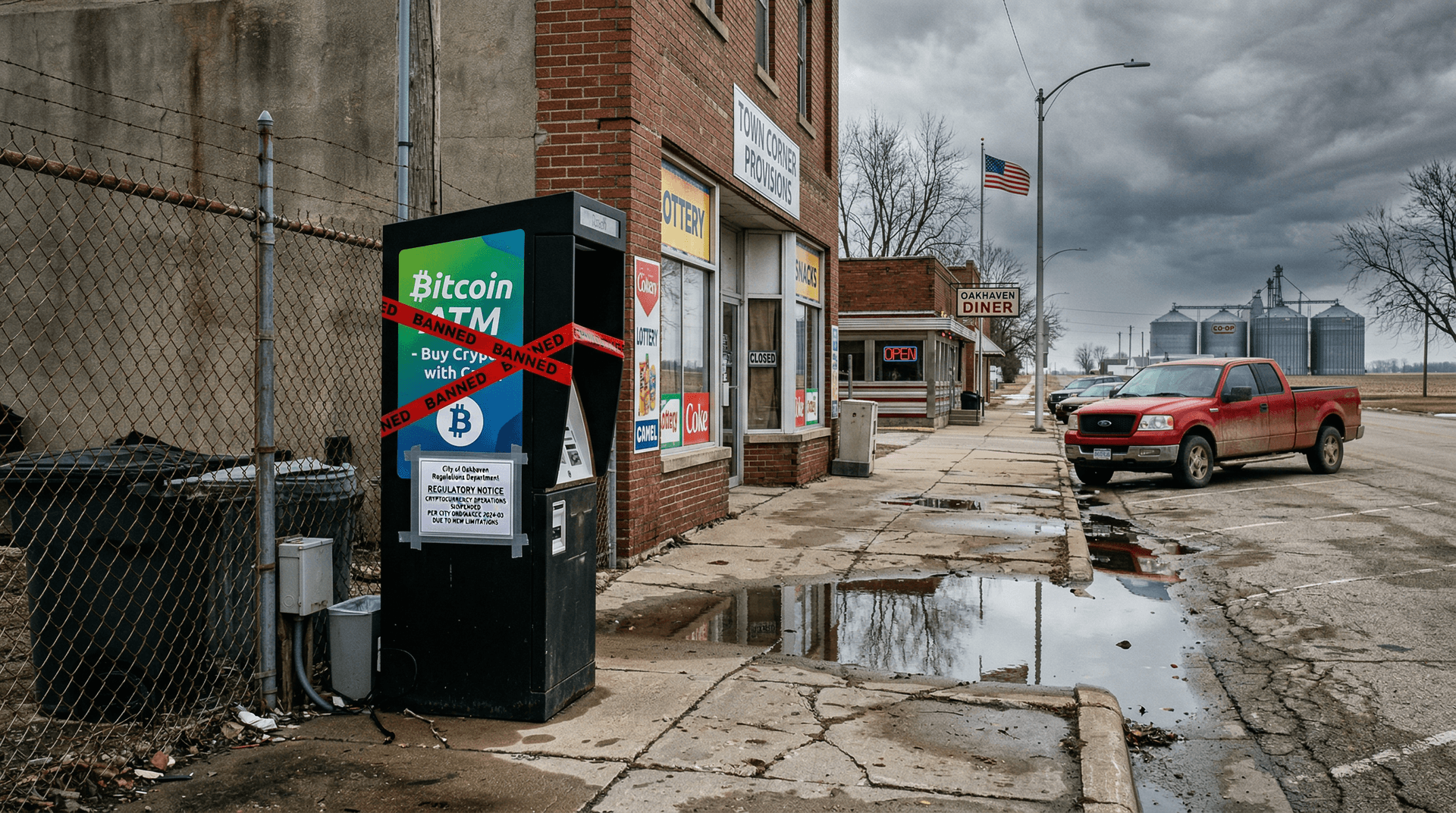
Spokane Valley city council voted 5-2 on April 10, 2026, to ban crypto ATMs. The ordinance targets 57 scam complaints the Spokane Valley Police Department received in 2025. The ban starts May 1, 2026.
Users insert cash into kiosks, pay 10-20% fees, and buy Bitcoin. Scammers exploit this setup. Council members highlighted fraud risks to local families.
Scam Surge Fuels Crypto ATM Bans
Spokane Valley residents lost $120,000 USD to kiosk scams in 2025, Spokane Valley Police Department records show. Fraudsters push fake investments through these machines. Crypto fraud cases rose 40% that year, department data confirms.
Kiosks demand no ID verification. Scammers send QR codes for buyers to scan. Romance scams often route payments here, police reports note.
Peoria, Illinois, tallied $750,000 USD in crypto scam losses last quarter, Illinois Attorney General Kwame Raoul's office reports. Peoria city council holds hearings on its own crypto ATM bans. Residents testified about wiped-out savings from kiosk transactions.
Midwest Cities Weigh Crypto ATM Bans
Des Moines, Iowa, police received 30 kiosk-related complaints in Q1 2026. Local banks flagged large cash withdrawals tied to scams. City leaders schedule a six-month moratorium vote next week.
Springfield, Missouri, tracks the trend. The Missouri Secretary of State's task force reported $1.2 million USD in Ozarks crypto scams for 2025. Kiosks cluster in grocery stores and malls, drawing easy cash from shoppers.
These crypto ATM bans shield Midwest families and farmers. Rural operators risk retirement funds on volatile crypto. Kiosks promise quick gains amid market dips, ensnaring heartland savers.
How Crypto ATMs Enable Fraud
Kiosks link to blockchains via the internet. Users dispatch coins to scammers' anonymous wallets. Blockchain transparency crumbles in fast, unverified transactions.
Bitcoin Depot operates 7,000 kiosks nationwide. Spokane Valley imposes $5,000 USD fines per illegal machine and demands immediate removal.
Evansville, Indiana, prosecutors charged a kiosk operator with unlicensed money transmission. Seniors suffered most losses. Local banks now promote secure digital wallets as safer alternatives.
U.S. Treasury Department reports warn of money laundering risks. Midwest broadband supports legit crypto trading, but kiosks evade bank oversight.
Heartland Economies Feel the Sting
The Federal Trade Commission projects $2.5 billion USD in U.S. scam losses for 2026. Midwest states account for 15% of that total, FTC data shows. Rural communities recover slowest from financial hits.
Corn belt farmers forfeit crop profits to scams. The Illinois Farm Bureau Federation warns of up to 10% annual income risk from fraud—$80,000 USD for a typical 1,000-acre operation earning $800,000 USD.
Pilot programs with kiosk restrictions cut fraud claims 25% at regional credit unions. Banks roll out fraud-detection apps with real-time alerts for customers.
Small manufacturers in Decatur, Illinois, cite distracted workers post-scams. Decatur & Macon County Chamber of Commerce data reveals factory output dipped 3% last quarter.
National Push Builds Momentum
Over 20 U.S. cities banned kiosks since 2025. Oak Park, Illinois, near Chicago, cleared all downtown machines this month after merchant complaints.
Columbus, Ohio, city council votes on limits April 15, 2026. Merchants near kiosks saw 5% retail sales drops, Federal Reserve Bank of Cleveland studies confirm.
Blockchain strengthens Midwest manufacturing supply chains for tracking parts. Scams slow adoption. Regulators seek balanced rules to foster innovation.
Safeguards for Midwest Wallets
Iowa public schools teach crypto scam red flags in financial literacy classes. Regional banks host free blockchain workshops tailored for farmers.
Spokane Valley blazes the trail. The Heartland Finance Council aligns city responses. Its June 2026 report offers model ordinances for Midwest municipalities.
Chainalysis software tracks 80% of kiosk-linked fraud, the firm's data states.
FDIC-insured savings accounts stay secure. Local economies rebound faster with these protections.
Crypto's Legit Path Forward
Illinois pilots blockchain for grain contracts. Farmers trace shipments securely without risky kiosks.
Crypto ATM bans target scams, not innovation. Midwest investors committed $150 million USD to fintech startups last year, PitchBook data reports.
Operators shift to unregulated zones. Heartland leaders stay vigilant. Crypto ATM bans fortify community finances against fraud.