- AI-powered phishing scams stole $1.2M from Illinois-Indiana farms using voice clones.
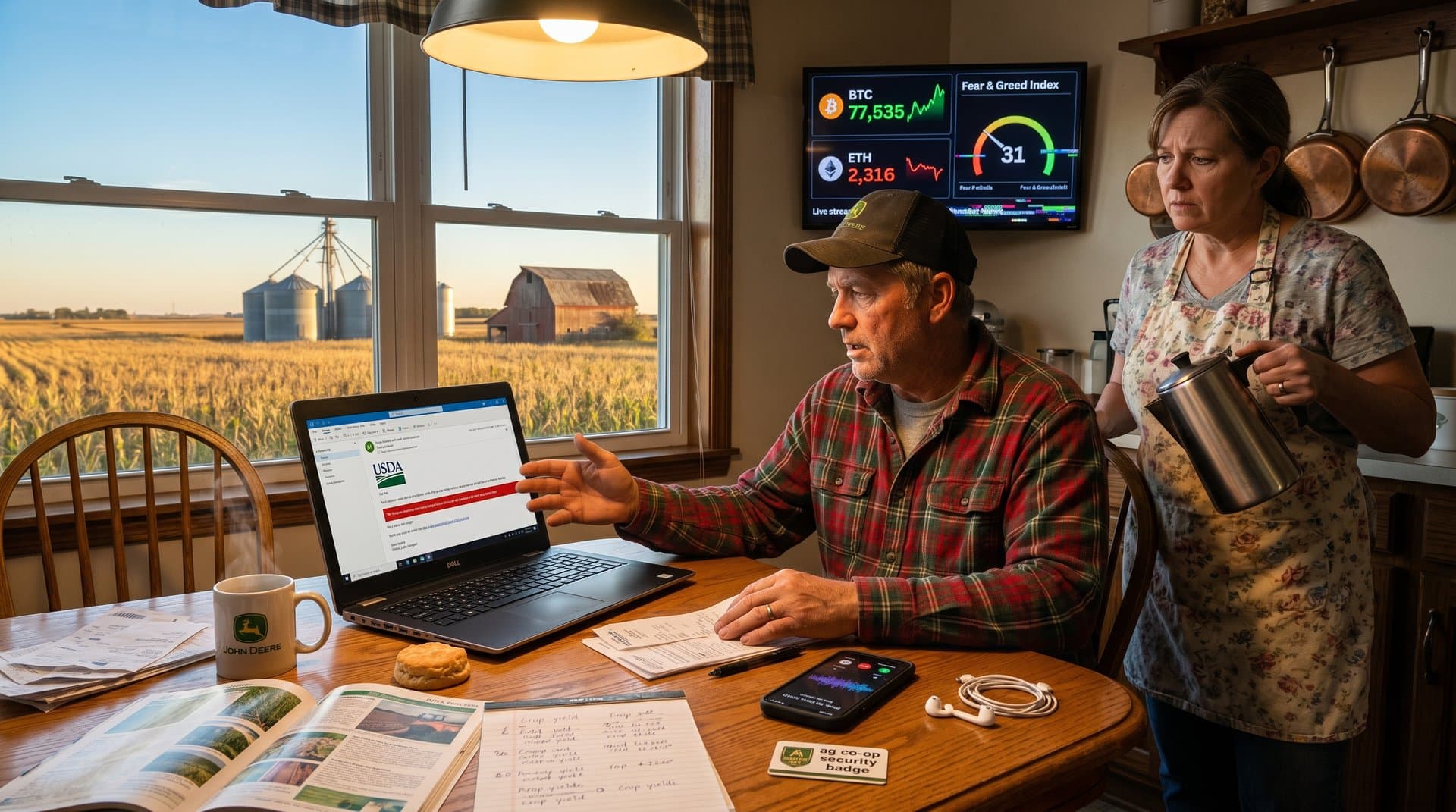
- Bitcoin hits $77,535 USD; Crypto Fear & Greed Index drops to 31, fueling lures.
- MFA blocks 99% of attacks; FBI IC3 reports $12.5B U.S. cyber losses in 2023.
AI-powered phishing scams targeted Illinois and Indiana farms, stealing $1.2 million USD in 2024, per FBI IC3 preliminary data. Scammers used generative AI for fake John Deere subsidy alerts and voice-cloned calls. Bitcoin traded at $77,535 USD on October 10, 2024. The Crypto Fear & Greed Index fell to 31, according to Alternative.me.
Ethereum held at $2,316.61 USD, down 0.2%. XRP dropped 1% to $1.42 USD. High crypto prices lure rushed farm investments from cash-strapped operators.
Generative AI Fuels Realistic Farm Phishing Attacks
Kaspersky reported AI voice clone phishing attacks doubled in the past year, per Reuters coverage on February 27, 2024. Scammers feed public data like crop yields from USDA registries into AI tools.
These tools generate emails with perfect grammar, local slang from Illinois Farm Bureau posts, and forged logos. Iowa farmers clicked links that installed malware stealing bank logins tied to crop loans.
Voice clones from 30-second county fair videos demand wire transfers for "urgent crop insurance." The FTC warns these tactics top phishing lists nationwide.
Rural Gaps Leave Heartland Farms Exposed
Midwest farms run tight networks with limited IT staff. Scammers reference specific John Deere tractors or 2023 drought losses from Indiana co-op directories.
Small operations often skip advanced cybersecurity. A Decatur, Illinois, hardware store lost $45,000 USD to an AI email about supply delays. Keylogger attachments hit QuickBooks files.
The FBI's Internet Crime Complaint Center (IC3) logged $12.5 billion USD in U.S. cyber losses for 2023, per their annual report, with agriculture hit hardest. Rural broadband averages 25 Mbps, per FCC data, delaying security patches.
Shared co-op laptops spread malware quickly. Bitcoin's $77,535 USD peak worsens fake crypto advisor pitches to farmers.
Scams Hammer Farm Cash Flow and Operations
Phishing drains accounts used for seed loans and equipment financing. U.S. Bank blocked $2.3 million USD in suspicious wires last quarter, per their fraud report, but cash flow still suffers.
Malware locks Case IH tractors, forcing $15,000 USD ransomware payouts. Insurance claims spiked 35% in farm cyber incidents, according to Nationwide's 2024 analysis.
Scammers promise fake Ethereum recoveries at $2,316.61 USD. USDT at $1.00 USD lures vanish funds via deepfake approvals. State fair photos enable six-month attack cycles.
Real Midwest Cases Highlight AI Fraud Surge
A Springfield, Illinois, 450-acre corn farm wired $28,000 USD after an AI call mimicking the local co-op. FBI IC3 tracked similar rural cases up 25% year-over-year.
Indiana soybean growers lost $67,000 USD to fake USDA grants. John Deere issued alerts on spoofed emails, but 12% of recipients still engaged, per company data.
Peoria manufacturers faced AI phishing on ag tech suppliers. Chainalysis reported $1.7 billion USD in crypto scams last year, with rural victims rising.
Simple Steps Block Most AI Phishing Threats
Enforce multi-factor authentication (MFA) on email, banking apps, and QuickBooks. Microsoft Defender scans attachments and catches 98% of malware, per their tests.
Train teams on red flags like odd URLs, urgency demands, or unverified calls. Always verify via in-person co-op offices or known phone numbers.
Report incidents to FBI IC3 right away. The FTC recommends AI anomaly detection in farm software like Farmers Edge.
Crypto Volatility Raises Farm Scam Dangers
Bitcoin's $77,535 USD surge draws fake DeFi pitches to cash-strapped farmers. XRP at $1.42 USD prompts voice-cloned trade flips promising 50% gains.
Fear & Greed Index at 31 signals extreme fear, per CNN Business on October 10, 2024. Midwest banks like Fifth Third offer crypto education amid AI threats.
Use hardware wallet keys. Verify grants through official USDA portals, not email links. Heartland farms need vigilance as AI-powered phishing scams evolve.
Frequently Asked Questions
What are AI-powered phishing scams?
Generative AI crafts personalized emails, voice clones, and deepfakes mimicking John Deere or co-ops, using farm data for $1.2M Midwest losses.
How do AI-powered phishing scams target Midwest farms?
Public USDA crop data and social clips tailor attacks. Fake subsidies lead to malware stealing crop loan funds.
How to protect farms from AI phishing?
Use MFA, scan with Microsoft Defender, verify calls in-person. Report to FBI IC3.
Why link crypto prices to farm phishing risks?
Bitcoin at $77,535 USD sparks fake investment pitches. Fear & Greed at 31 heightens urgency in deepfake scams.