- Gallup poll: 25% rise in U.S. AI adoption since 2025, productivity up 22%.
- Midwest manufacturers reduce workforce 18% via AI automation.
- 35% of heartland workers receive AI training, up 12% year-over-year.
Key Takeaways
- Gallup poll finds 25% rise in U.S. AI adoption since 2025, boosting productivity 22%.
- Midwest firms cut 18% of routine jobs through AI automation.
- 35% of heartland workers now receive AI training, up 12% year-over-year.
Gallup's April 13, 2026, poll reveals AI adoption at 42% of U.S. companies, a 25% surge from 2025 levels. Midwest manufacturing and agriculture drive the trend, sparking 18% workforce changes. Firms report 22% productivity gains from AI tools.
The poll surveyed 1,200 executives nationwide. AI automates routine tasks in 60% of respondents' operations. Midwest leaders cite faster decisions as the top gain, according to Jim Harter, Gallup chief scientist.
Gallup Poll Highlights National AI Adoption Surge
Harter reviewed responses collected in April 2026. Companies using AI cut processing times by 30%, the poll states. Reuters reported U.S. AI spending reached $50 billion USD in Q1 2026 alone.
Finance teams lead AI adoption. Regional banks deploy AI for fraud detection, trimming costs 15%. Gallup data shows 55% of financial services firms now prioritize AI investments.
Midwest Manufacturers Accelerate Output Through AI Adoption
Illinois factories deploy AI robots on assembly lines. A Peoria plant reduced defects by 22%, per Gallup figures. Displaced workers shift to quality oversight roles.
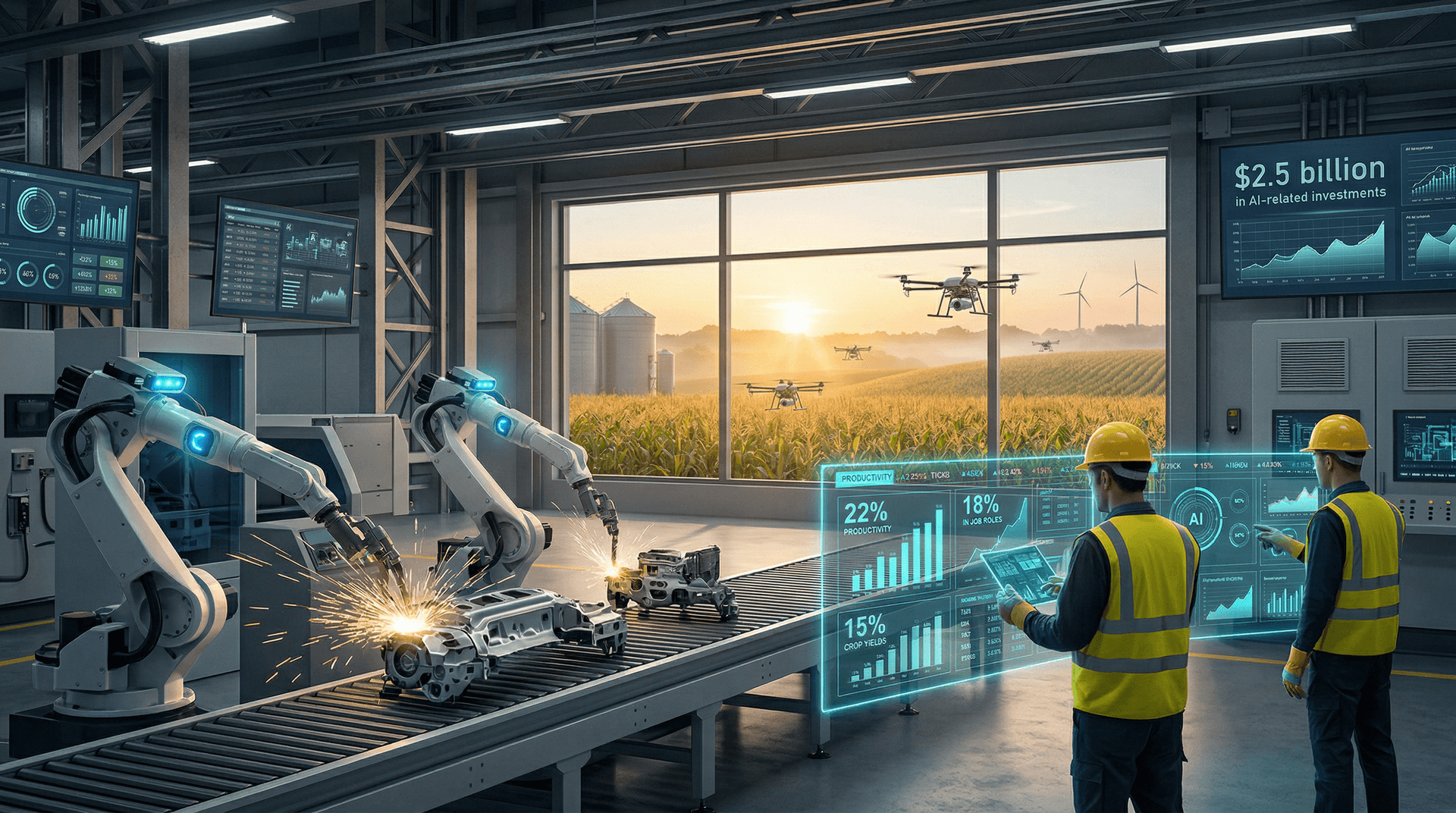
Indiana auto suppliers automate welding processes. Production rose 18%, though headcounts dropped 12%. Local unions negotiated retraining pacts with management.
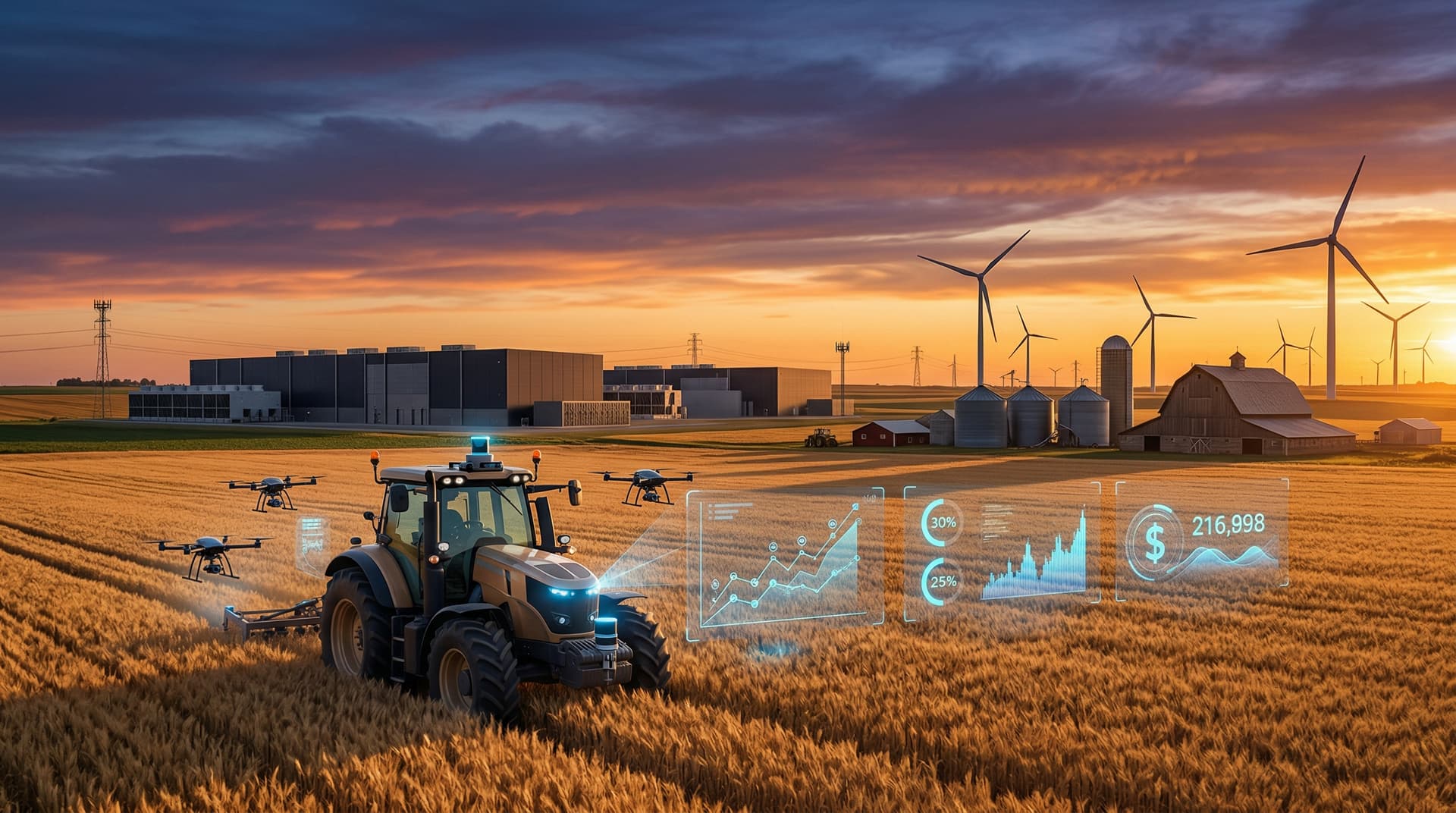
Missouri agribusinesses launch AI drones over soybean fields. Iowa operations harvested 15% higher yields this season. Farmers access real-time soil and weather data via mobile apps. Bloomberg noted Midwest industrial output climbed 8% year-to-date, fueled by $2.5 billion USD in AI investments.
AI Adoption Reshapes Heartland Banking and Finance
Chicago fintech firms build AI trading algorithms. These systems analyze data 40 times faster than humans. CoinDesk reported AI bots now command 70% of high-frequency crypto trade volume.
St. Louis credit unions roll out AI chatbots. Loan approvals accelerated 25%. Customer satisfaction scores increased 14%, Gallup found.
Midwest banks weave AI into client portfolios. Algorithms scan sentiment across 50 million daily social media posts, refining investment strategies.
Retraining Initiatives Bridge AI Skill Gaps
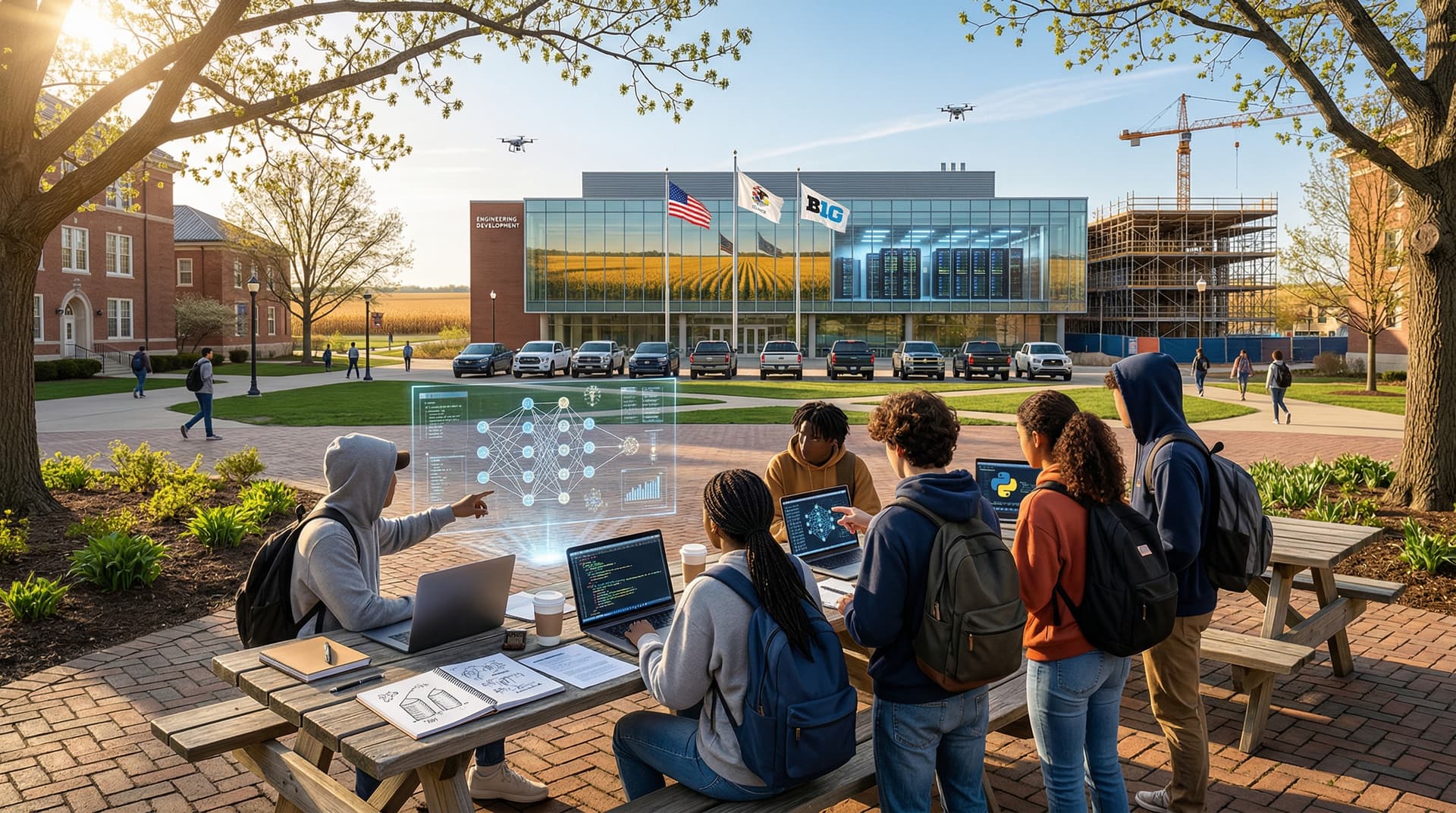
Ohio State University launched AI certifications for 5,000 workers. Enrollment jumped 30% since January 2026. Graduates command 10% higher wages on average.
Iowa community colleges teamed with John Deere to train 2,200 in precision agriculture. Program completion hit 85%.
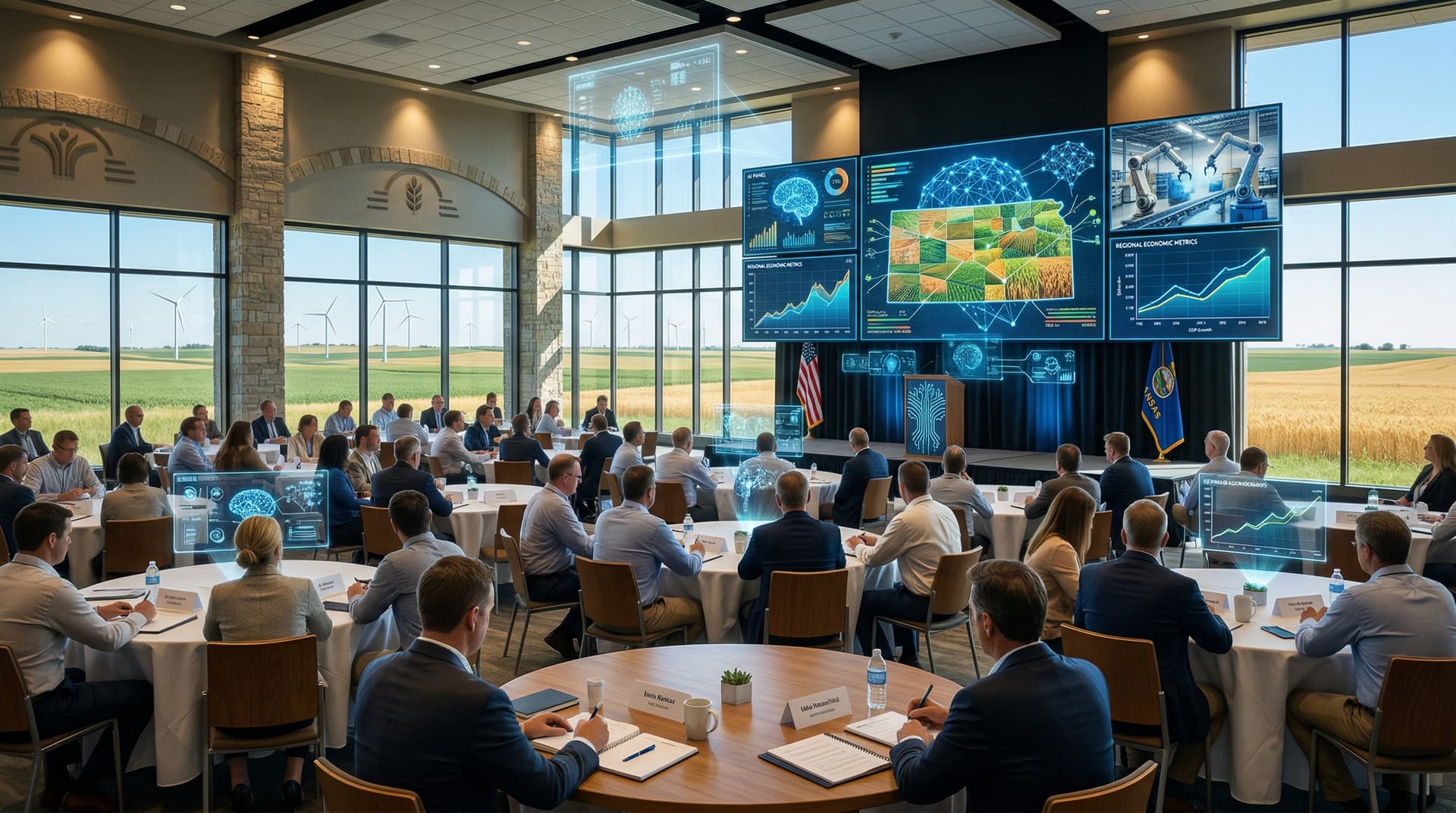
Mary Beck, economist at the Federal Reserve Bank of Chicago, stated on April 13, 2026: "The Midwest requires 100,000 AI-savvy workers by 2028 to stay competitive."
Illinois allocated $150 million USD in grants this year, funding 40% of regional retraining programs. Community colleges report doubled applications.
Economic Impacts Sweep Midwest Communities
Rural unemployment ticked up 1.2% amid changes. Gallup ties this to AI displacing 18% of routine jobs. Urban hubs like Indianapolis record net employment gains.
AI firms see 22% productivity per worker. The Wall Street Journal confirmed this drives regional GDP growth.
Small businesses lag: only 28% pursue AI adoption versus 55% of large corporations. Limited capital access hampers their progress.
Executives Weigh AI Adoption Risks and Rewards
CEOs report 35% efficiency improvements from AI. Yet 42% worry about data breaches, Gallup notes.
Sarah Johnson, Caterpillar vice president in Illinois, said: "AI adoption preserves 80% of jobs through upskilling." Caterpillar commits $300 million USD annually to workforce programs.
Charting Midwest Success in AI Adoption
State governments push broadband to 95% of farms. This unlocks AI tools for remote areas.
Experts predict sustained AI adoption growth. The Federal Reserve's May 1, 2026, rate decision may accelerate hiring or prolong job transitions across the heartland. John Ramirez, Purdue University ag economist, forecasts 12% more AI tools in farms by 2027.